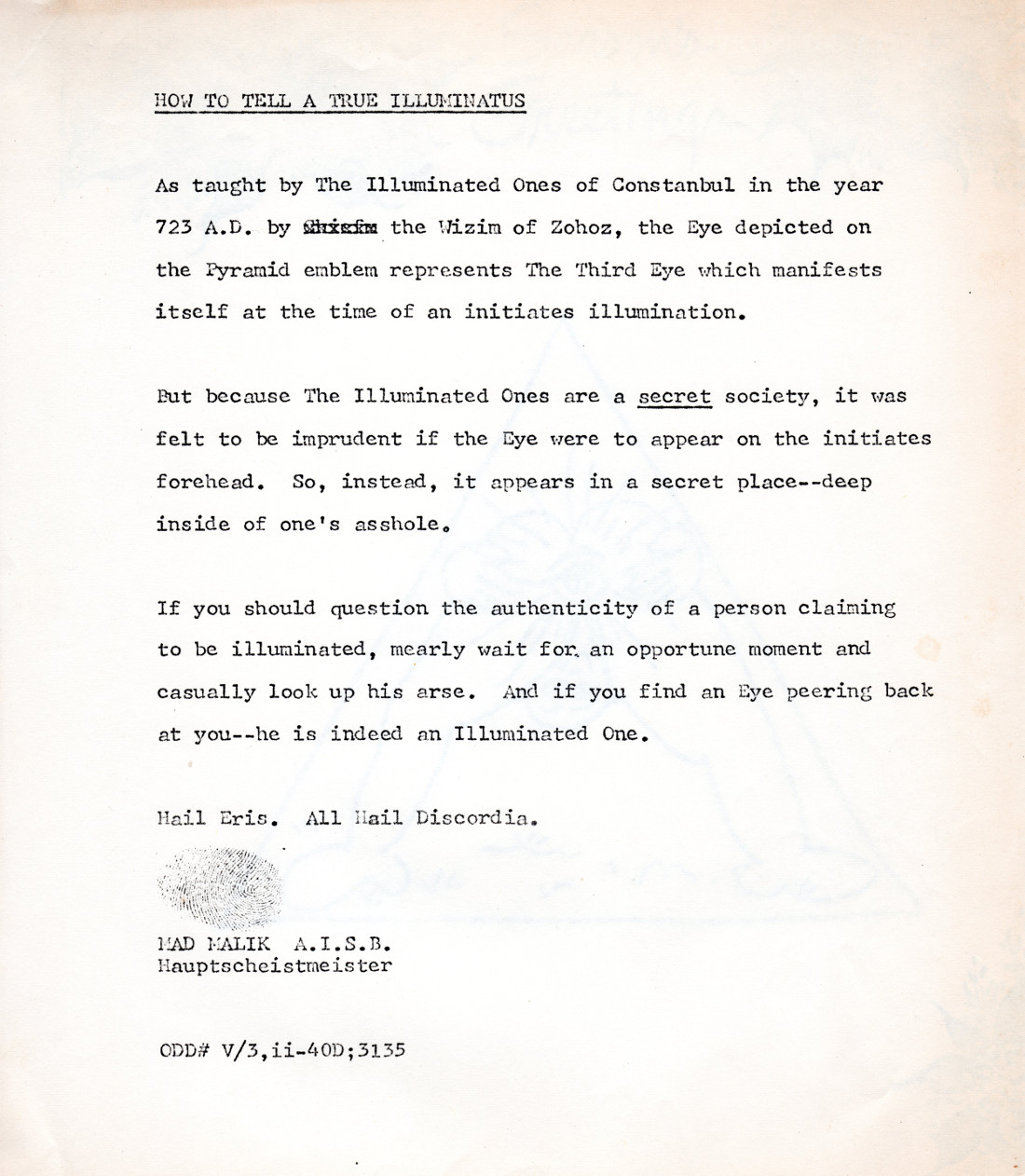
Courtesy of Greg Hill (aka Mad Malik, A.I.S.B.), instructions on “How To Tell a True Illuminatus” from a fake one, which probably means that Miley Cyrus is accepted, although not considered ancient at the moment.

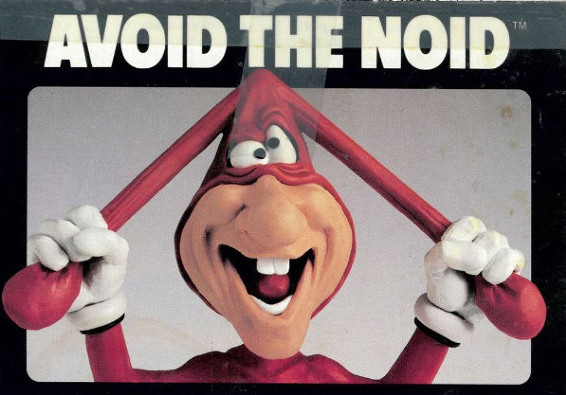 Pissed off that Domino’s Pizza ads featuring a manic little character named the Noid were trying to make fun of him, 22-year-old Kenneth Lamar Noid—equipped with a .357 Magnum—walked into a Domino’s in Chamblee, Georgia on January 30, 1989, ordered a combination pizza, then took the two employees working there hostage.
When police negotiators showed up with bull horns and that whole bit, Noid demanded $100,000 in cash, a getaway car (other reports claim he demanded a helicopter), and a copy of Robert Anton Wilson’s The Widow’s Son as ransom.
After a five-hour standoff (according to the Law of Fives), the two employees escaped and Noid surrendered to the cops. All he got out of the deal was a pizza and a large Pepsi.
Following this incident, Domino’s discontinued using the Noid as their mascot, which had been a weird, though highly successful campaign, don’t ask me why.
Noid (Kenneth Lamar, this is) was charged with kidnapping, aggravated assault, extortion, possession of a firearm and failure to pay for his pizza.
Found not guilty by reason of insanity, Noid was subsequently shipped off to a mental institution for a three month stay. He tragically committed suicide in 1995.
This has been today in Discordian History.
Send us your Eris of the Month Club submissions (more info here) by using the form at the bottom of The MGT. page.
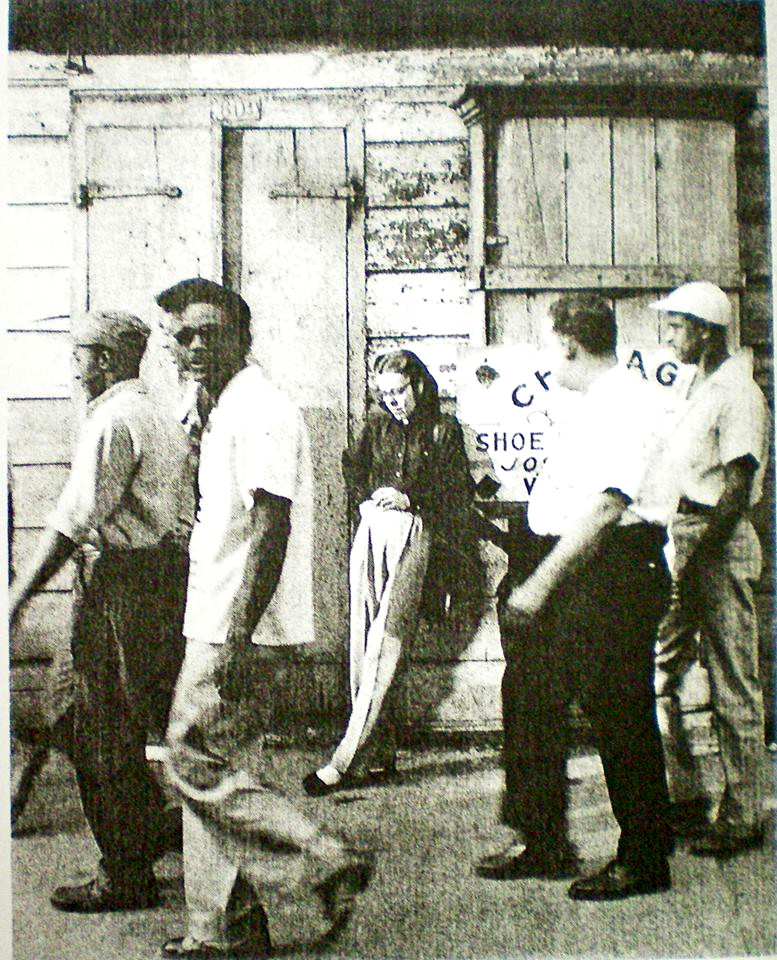
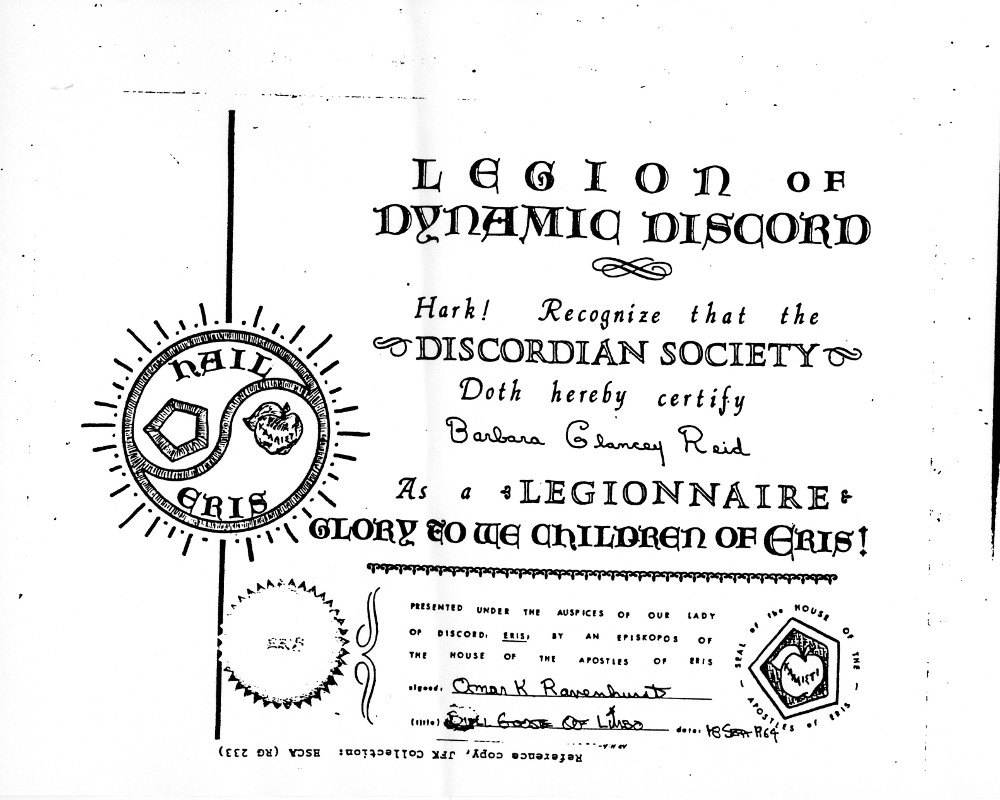
Barbara Reid was not only a voodoo practitioner, beret wearing bohemian, Early Discordian Society member and traditional jazz buff, but she was also a key witness in Jim Garrison’s investigation.
As Discordian history instructs, Reid claimed that she saw Kerry Thornley and Lee Harvey Oswald together in New Orleans in September 1963, although Thornley denied this accusation, insisting that the last time he’d been in contact with Oswald was at El Toro Marine Base in 1959.
According to Jim Garrison in On The Trail of the Assassins (Amazon):
“From his own admission, as well as from the statements of Barbara Reid and a number of others, we learned that Thornley had been in New Orleans in 1963, finally leaving the city only a few days after Kennedy’s murder. Reid, a long-time French Quarter resident who had known both Thornley and Oswald, described seeing them together on several occasions. One of them was in early September 1963 at the Bourbon House, a combination bar and restaurant in the French Quarter. Thornley, who usually wore his hair extremely long, had just returned from a trip out of town. This time he was wearing his hair unusually short and closely cropped, as Oswald invariably did. Reid recalled having said to them, “Who are you guys supposed to be? The Gold Dust Twins?
“We were eager to talk to Kerry Thornley, but he was not an easy man to locate. It took us a lot of legwork and more than a year to do it. We had investigators going to every place in the French Quarter until we learned what had been his main hangout—Ryder’s Coffee House. Except for occasional visits to the Bourbon House on Royal and Bourbon Streets, Thornley seldom went anywhere else.” 00001
Inside the span of two mere paragraphs, Garrison was able to stuff a staggering amount of misinformation. His claim that Barbara Reid knew Oswald has no factual basis, as Reid’s only encounter with Oswald (or someone she thought was Oswald) occurred during her supposed sighting of Oswald and Thornley at the Bourbon House in September 1963.
How Garrison came up with the notion that Reid actually knew Oswald is another head-scratcher. Reid never claimed that she knew Oswald. In her 1968 affidavit, Reid recalled “associating a sense of familiarity with this individual who had received some publicity as a Communist because of his earlier activity of distributing Fair Play for Cuba leaflets in front of the International Trade Mart in New Orleans.”
Garrison further states that Reid saw Thornley and Oswald together on several occasions. However, Reid never said anything of the sort. The only time Reid claimed she saw Thornley and Oswald together (according to her affidavit) was at the Bourbon House.
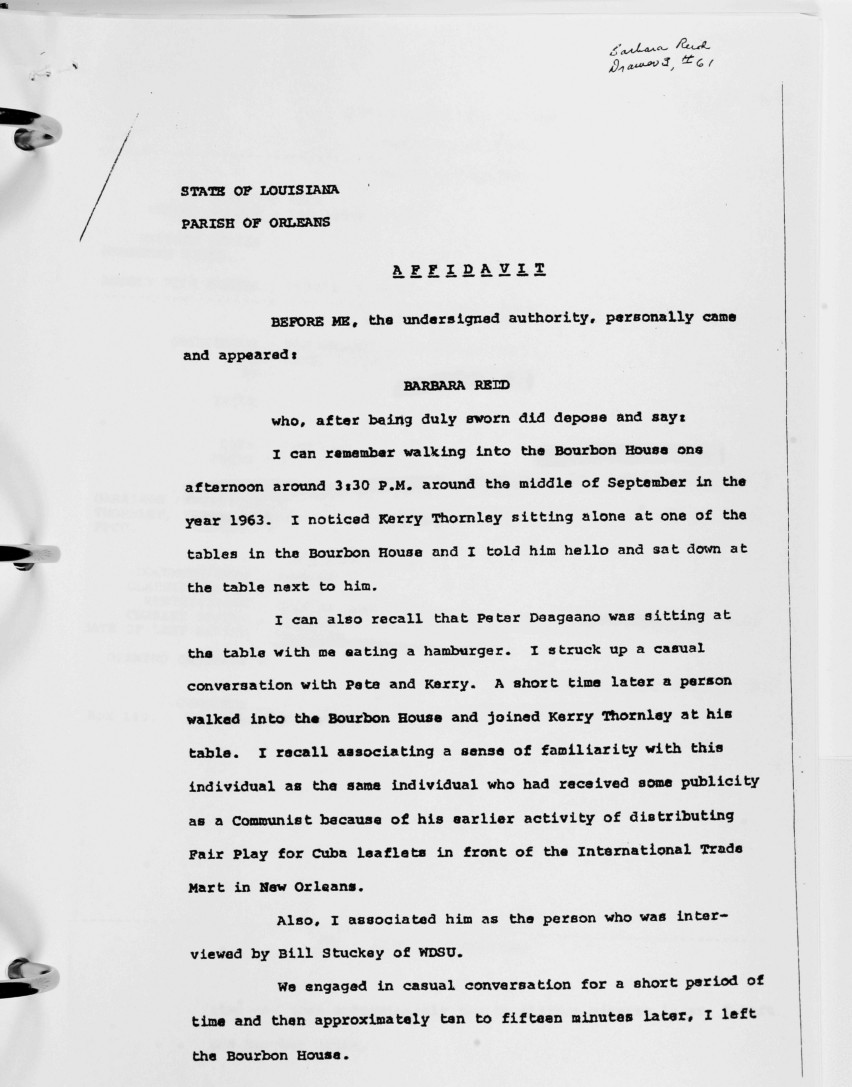
Reid’s claim that she told Oswald and Thornley they looked like “the Gold Dust Twins” is another little nugget that didn’t appear in her 1968 affidavit, suggesting that Reid later spiced up her story (during her 1978 interview with the House Select Committee on Assassinations) to fit with Garrison’s theory that Thornley was one of the notorious Oswald doubles.
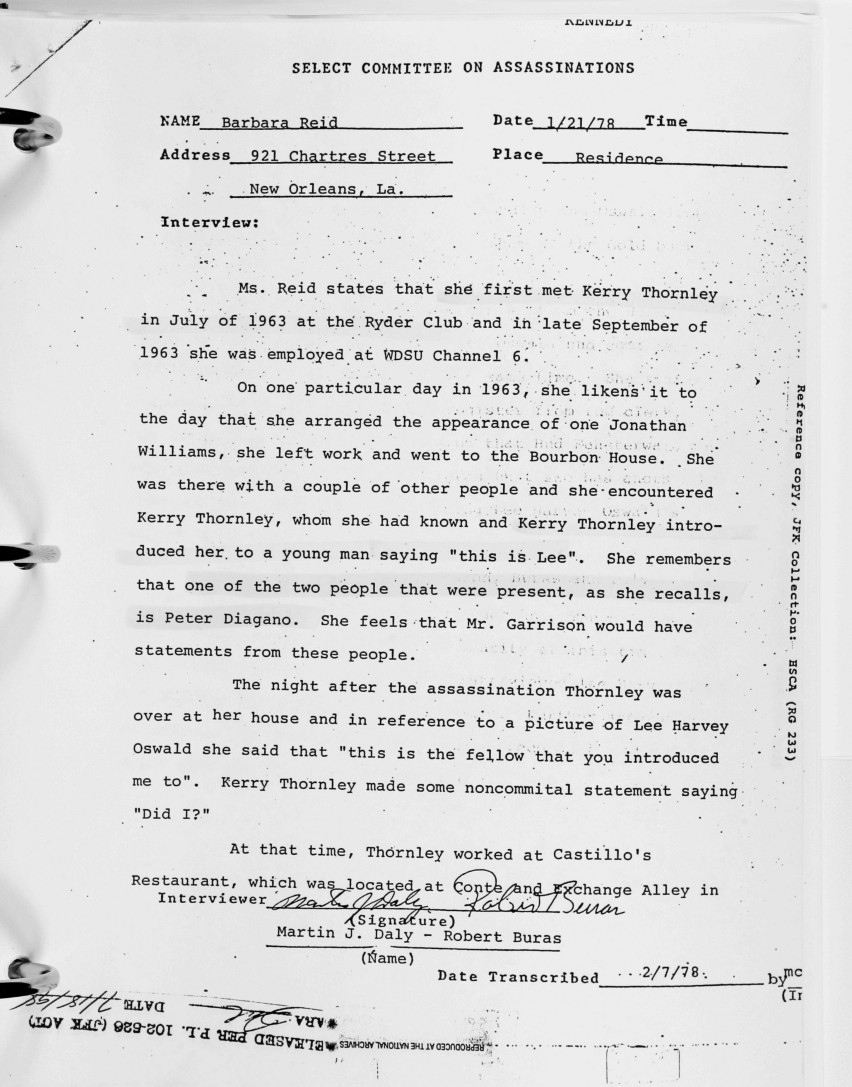
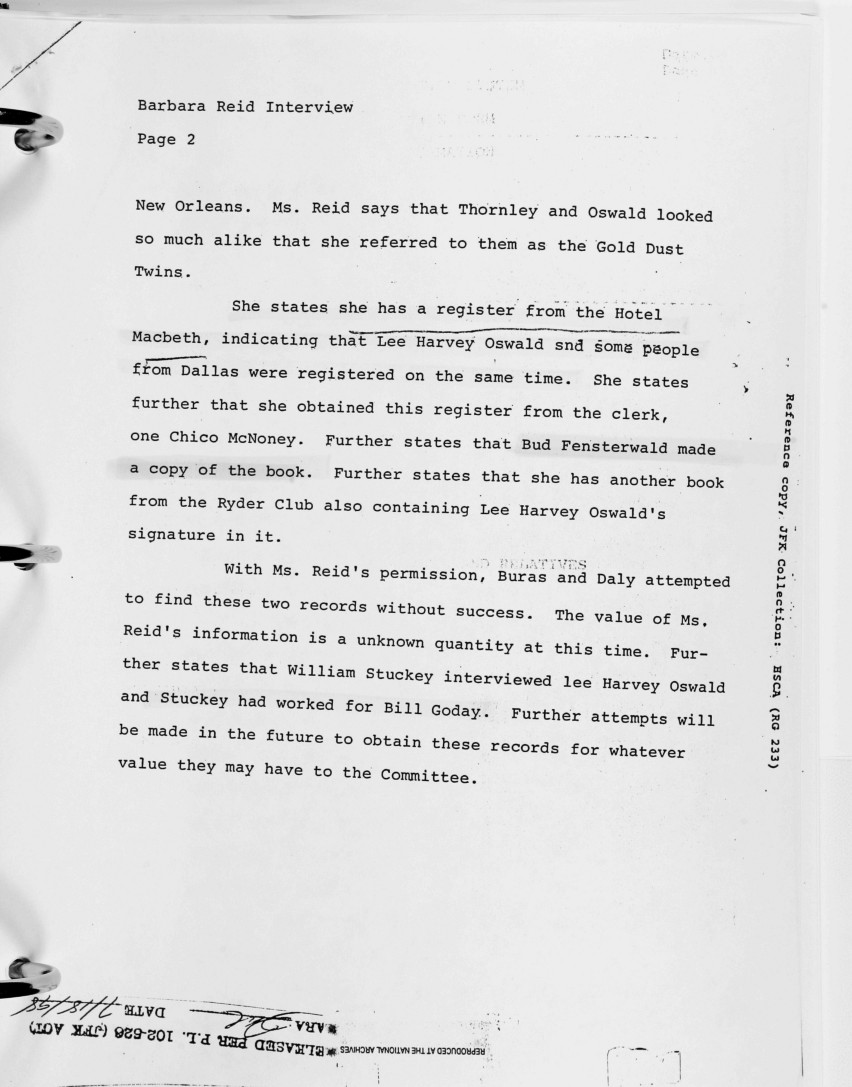
Garrison’s claim that Thornley “wore his hair extremely long” has no substance. Thornley—as was the style of the day—let his hair grow long in the late 1960s, but the claim that he sported a new haircut to more resemble Oswald in 1963 is just another among Reid and Garrison’s impossible-to-prove-allegations.
I suspect the reason Garrison glommed on to the notion that Thornley sported long hair may have been on account of a July 1967 memo (posted below) from Assistant District Attorney Jim Alcock documenting his interview with Clifford Wormser, owner of Cliff’s Junkyard in New Orleans.

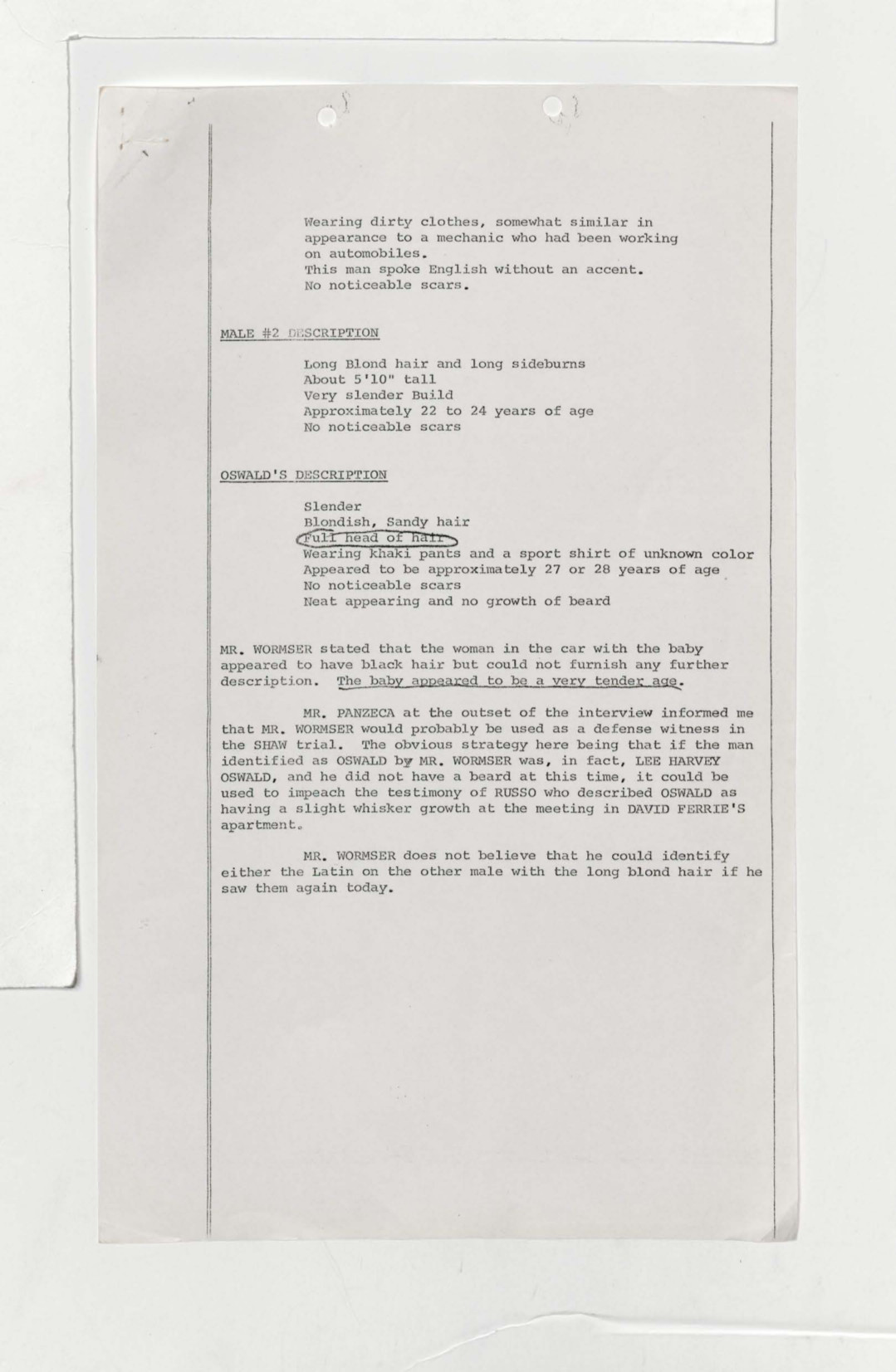
According to Wormser, he was visited in September 1963 by Lee Oswald, his wife and baby, along with two other men, one a Latin looking fellow and the other a Caucasian with long blond hair. At the top of the memo, Garrison scribbled ‘Kerry Thornley’ indicating his suspicion that Thornley was one of the individuals accompanying Oswald during this junkyard visit.
Late September 1963 was the time-frame when Lee Oswald and Kerry Thornley were both in New Orleans during a 2 to 3 week period, which evidently led Garrison to theorize that the long blond haired fellow identified by Cliff Wormser was actually Thornley, and that Kerry cut his hair shortly afterwards. One of the problems with this scenario was that Thornley had brown hair, not blond.
Whatever the case, the apparent intent of Thornley cleaning up his act with this fresh new haircut (once again according to Garrison’s convoluted theory) was due to his recurring role as an Oswald double, which begs the question: If Thornley was masquerading as an Oswald double why would he have allowed himself to be seen in the company of Oswald? Wouldn’t that have potentially compromised the whole Oswald double caper?

Garrison’s assertion in On The Trail of the Assassins that Thornley left New Orleans a few days following the assassination was also inaccurate, as it was actually three weeks after the assassination that Thornley moved to Arlington, Virginia on December 13th, 1963. This might seem like splitting hairs to some, but it only goes to illustrate how—when it came to Thornley—Garrison never got anything exactly right, and more often got it totally wrong.
To suggest that Thornley was difficult to locate was another fallacy perpetrated by Garrison to create the aura around Kerry as someone always in hiding or on the lam. At the time, Thornley was married with an infant child and held down dozens of menial jobs, while living at a few locations, in California and later Florida. He was also doing a lot of writing during this period, and his articles appeared in numerous publications. That Garrison encountered such difficulty tracking down Thornley says more about Big Jim’s dubious investigative skills than it does Thornley’s supposed elusiveness.
Garrison’s claim that the Ryder Coffee House had been Thornley’s main French Quarter hangout is also inaccurate. Kerry noted in his writings over the years that the Bourbon House—not the Ryder Coffee House—had been his main base of operations where he spent his idle hours writing or shooting the bull with other patrons. In recent correspondence with your humble author, Thornley’s French Quarter friend, Grace Zabriskie (formerly Grace Caplinger), confirmed that the Bourbon House was indeed Kerry’s main French Quarter hangout, and to a lesser degree, Carlos Castillo’s Mexican Restaurant.
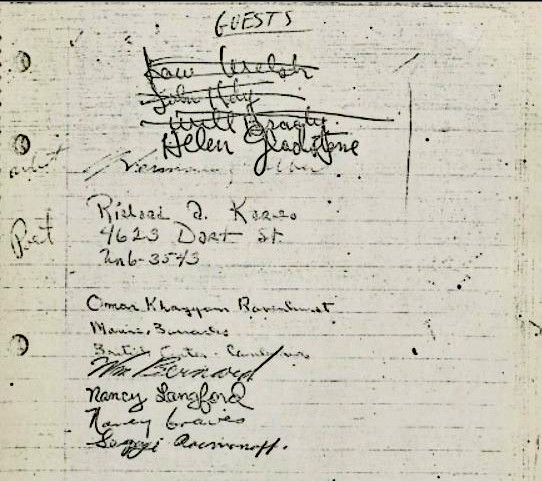
In regards to the Ryder Coffee House, Barbara Reid claimed she had evidence of Oswald and Thornley both signing the guestbook belonging to Jack Frazier, the manager of Ryder’s. In a memo from Harold Weisberg to Garrison, Weisberg noted that “several names may be disguised in this book, for example, Thornley’s in the ‘Discordian’ language on the ninth page. You have the Discordian files that I obtained on a previous trip. These will reflect which Omar Khyam is who….” 00002
Make of this what you will, but apparently Weisberg thought he was hot on the trail of a diabolical Discordian conspiracy and provided Garrison with copies of Frazier’s guestbook as evidence of this perceived diabolism. A review of the guestbook reveals that Thornley did indeed sign it using his Discordian moniker of Omar Khayyam Ravenhurst, which indicates that Thornley visited Ryder Coffee House on at least one occasion. However, there’s no evidence that Oswald—using his real name or an alias—ever signed the guestbook.
Robert Karno—who in the absence of Jack Frazier managed Ryder Coffee House during the relevant timeframe—stated in an interview with Asst. D.A. Jim Alcock that he thought he met Oswald at Ryder’s on one occasion, although he didn’t sound completely positive: “Well, I—I believe I did. I’m almost sure I did…” As for Thornley, Karno remembered meeting him there only once, as well, and said nothing about having seen Thornley and Oswald together. 00003
Omar Khayyam Ravenhurst aka Kerry Thornley.
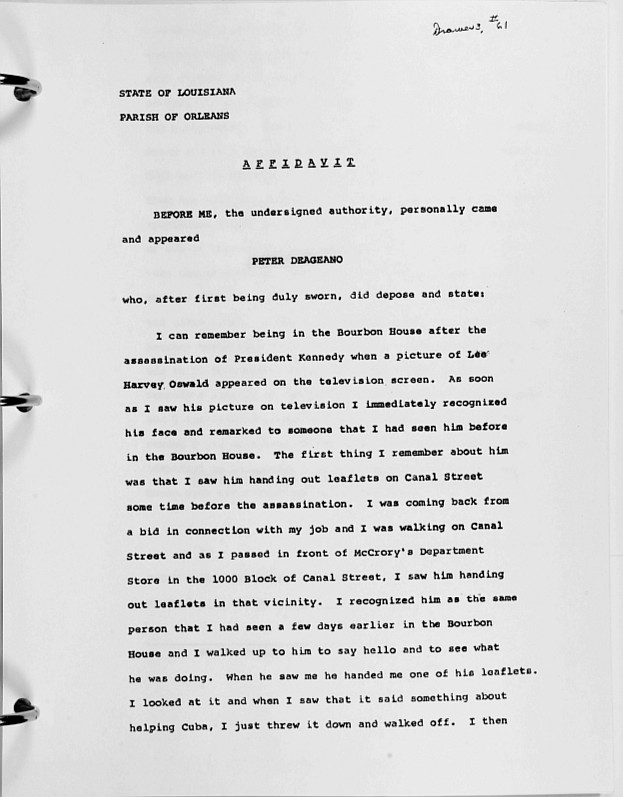
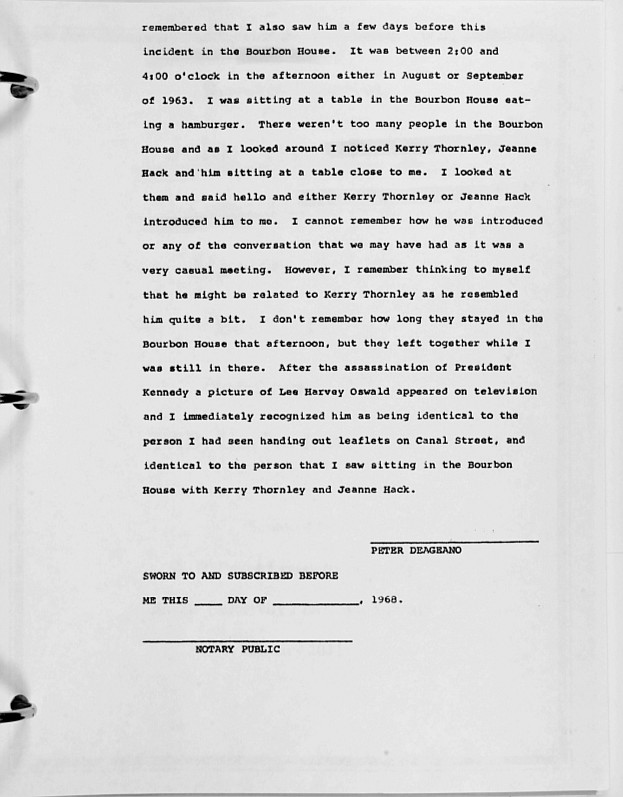
A second supposed witness to the Oswald/Thornley Bourbon House meeting was a French Quarter bookie named Peter Deageano. According to Deageano’s affidavit:
“It was between 2:00 and 4:00 o’clock in the afternoon either in August or September of 1963. I was sitting at a table in the Bourbon House eating a hamburger. There weren’t too many people in the Bourbon House and as I looked around I noticed Kerry Thornley, Jeanne Hack, and (Oswald) sitting at a table close to me, I looked at them and said hello and either Kerry Thornley or Jeanne Hack introduced him to me. I cannot remember how he was introduced or any of the conversation that we may have had as it was a very casual meeting. However, I remember thinking to myself that he might be related to Kerry Thornley as he resembled him quite a bit.
“After the assassination of President Kennedy a picture of Lee Harvey Oswald appeared on television and I immediately recognized him as being identical to the person that I saw sitting in the Bourbon House with Kerry Thornley…”
Although it’s not indicated in Deageano’s affidavit—which happened to be unsigned—he was in Barbara Reid’s company during this alleged Oswald/Thornley sighting. That Deageano’s affidavit remained unsigned speaks volumes (perhaps) to the methods of Garrison and his staff. Nowhere else in Garrison’s files does an actual interview with Deagano appear, and it’s my suspicion that Reid and/or the D.A.’s office drafted the affidavit, but when they presented it to Deagano he refused to sign it, assuming it was ever shown to Deagano at all.

Read Part 1 of this series here.
00001 Jim Garrison, On The Trail of the Assassins, p. 70-72.
00002 3/17/68 memo by Harold Weisberg, http://jfk.hood.edu/.
00003 May 14, 1968 conversation between James L. Alcock and Robert Karno. Jim Garrison Papers, National Archives, John F. Kennedy Assassination Records Collection.
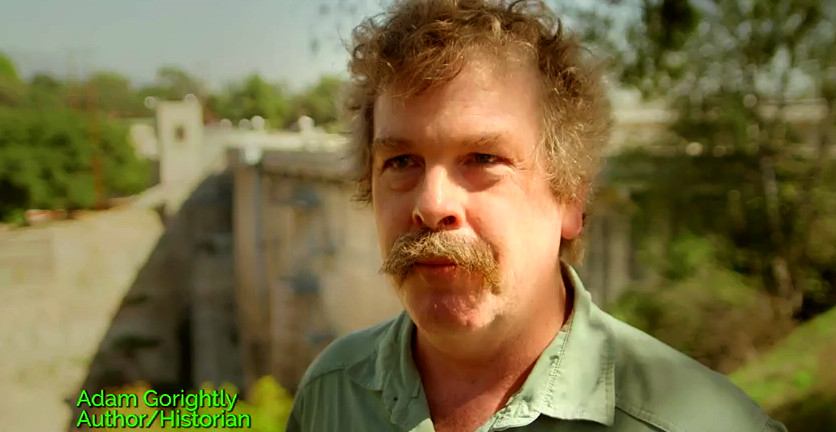 Definitely an off-topic post for our mission of documenting Discordianism on this site, but Early Discordian Robert Anton Wilson was an admirer of Jack Parsons, hence the connection, however thin, to the interests we love and care about here.
Plus it’s got Adam Gorightly talking about some crazy-ass but true freaky history. Enjoy!
From the YouTube of Mandate 33:
“Outside Jet Propulsion Laboratories—at Devil’s Gate Dam in Pasadena—we meet with Adam Gorightly and discuss Jack Whitesides Parsons—rocket sorcerer—his wife Marjorie Cameron—seminal LA-based artist and magickal muse—and L. Ron Hubbard—founder of Scientology.
Adam discusses the Crowley-inspired Babalon Working—spanning Pasadena and the Mojave, tying up all three of them, and possibly the entire 20th century, in a chaotic magic ritual—opening up the floodgates on UFOes and ‘alien’ encounters over the following decades.
Adam describes connections with other contactees/unwitting ritual magicians and their strange ties to Parsons and Cameron—hinting at the supercharged occult network in California at that time.”
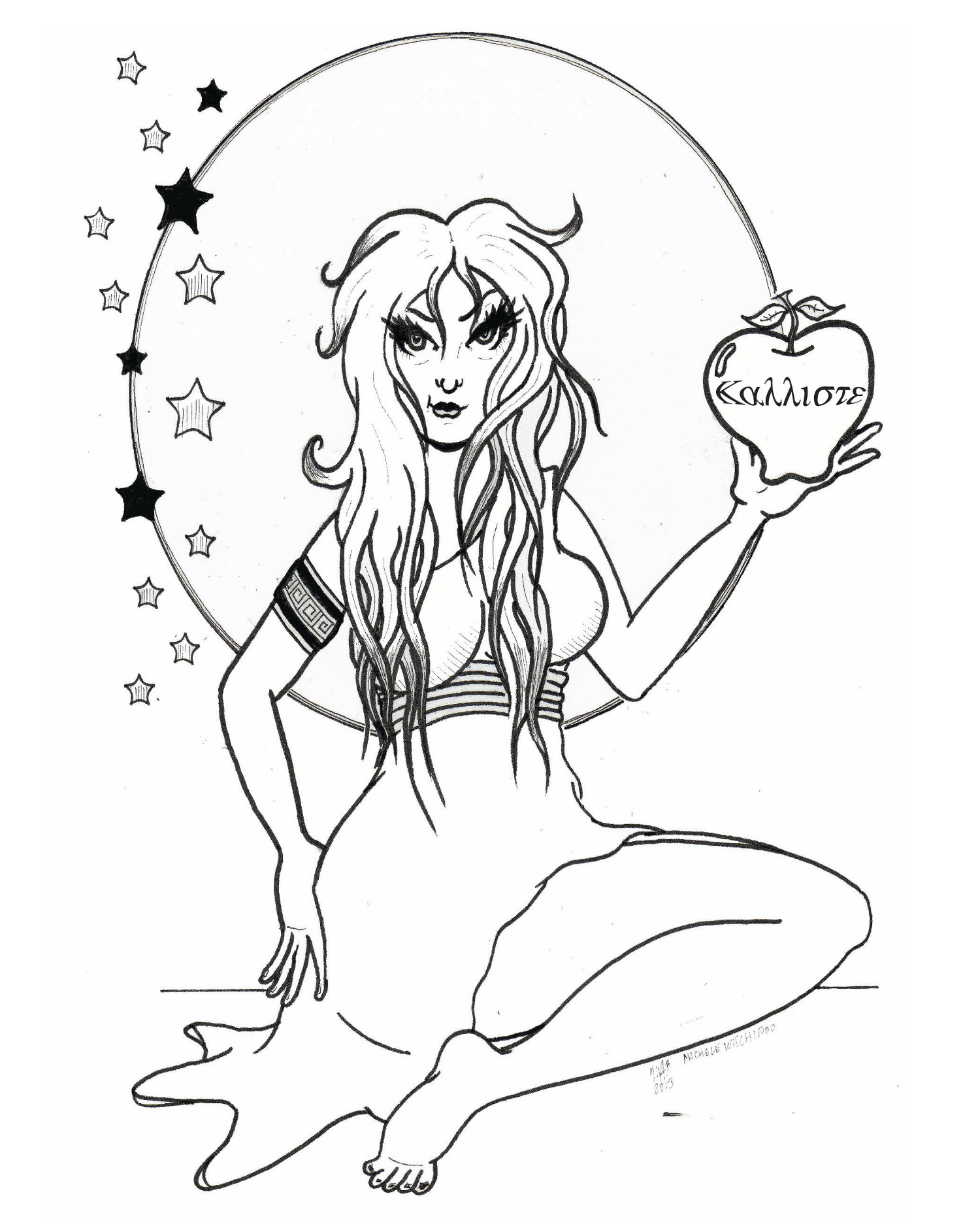
Send us your Eris of the Month Club submissions (more info here) by using the form at the bottom of The MGT. page.
Hail Eris! All Hail Discordia!
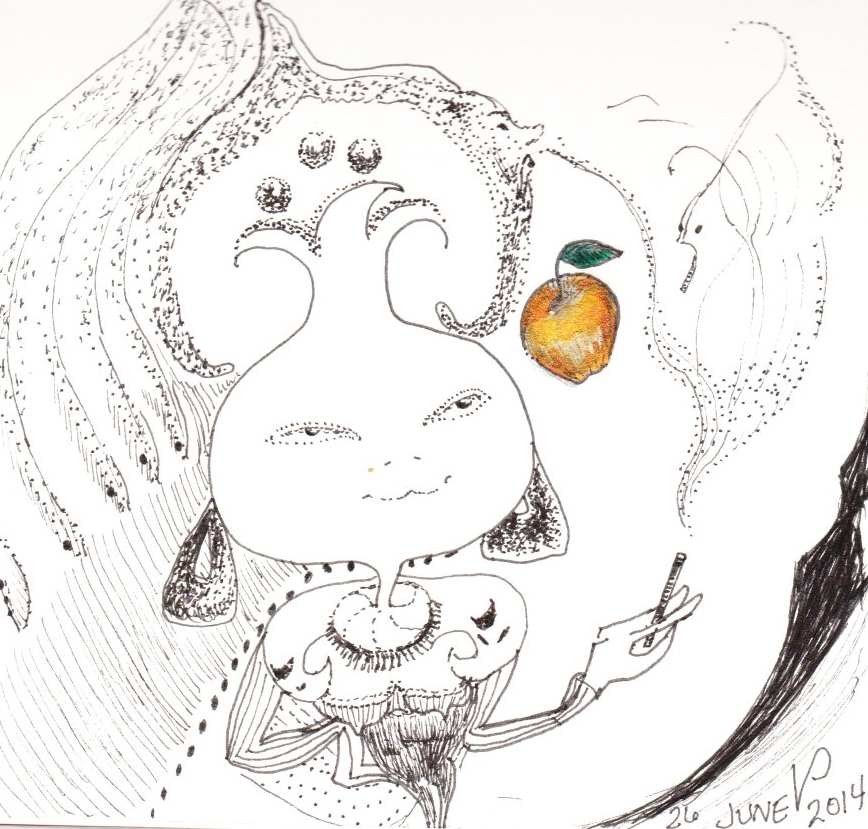
Send us your Eris of the Month Club submissions (more info here) by using the form at the bottom of The MGT. page.
Hail Eris! All Hail Discordia!
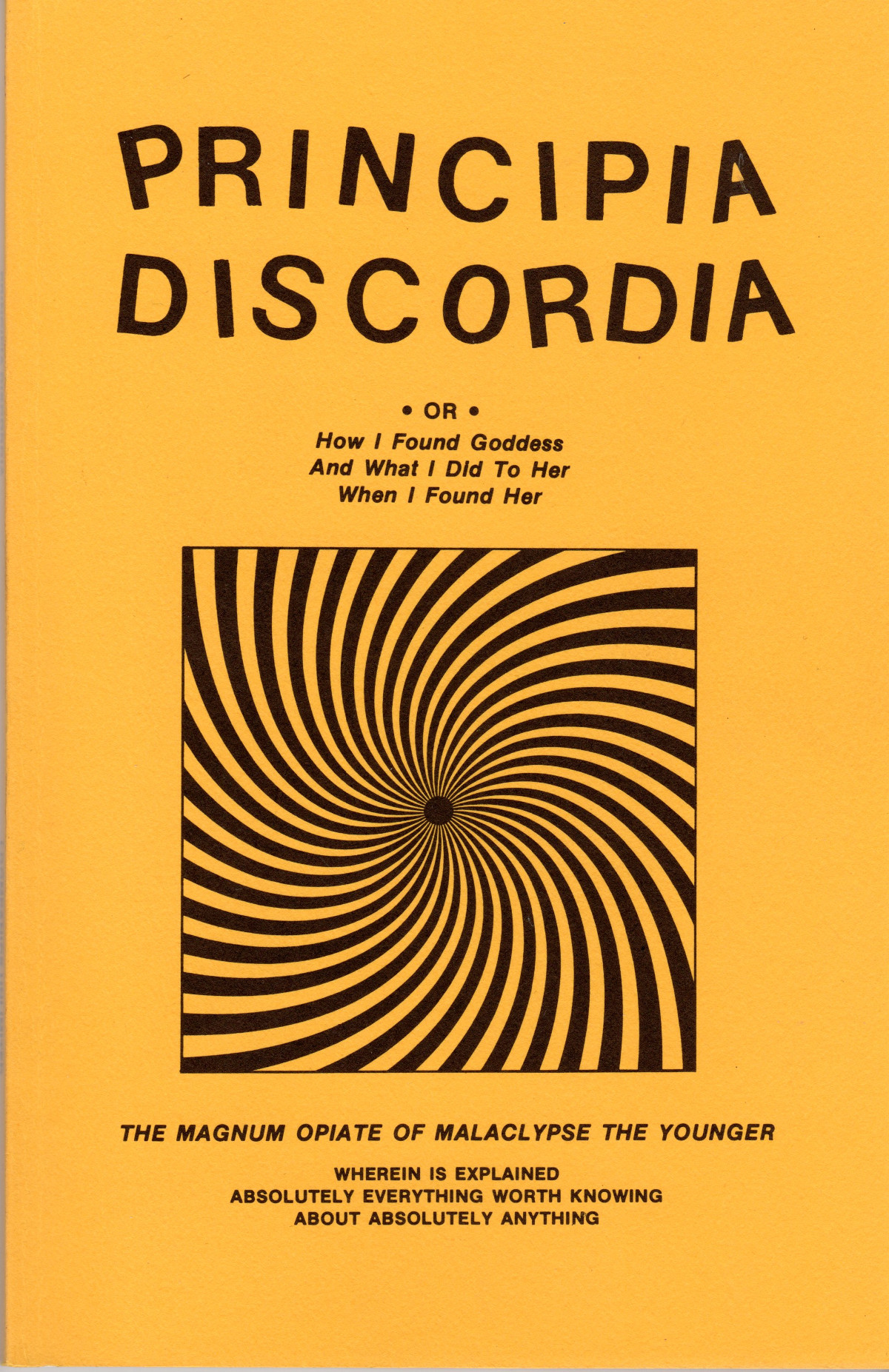
The Truth Shall Set You Confused… in 2,500 words or less!
2015 (or 3181 on the Discordian calendar) marks the 50th anniversary (maybe!) of the first edition of Principia Discordia, or How the West was Lost, published in New Orleans, Louisiana in 1965, consisting of a mere five copies that—according to Discordian co-founder Greg Hill—“were mostly lost.”
The details surrounding this rare 1st edition are enshrouded in as much myth and mystery as the JFK assassination itself, which—it so happens—will be forever linked to Discordianism due to its association with Discordian Society co-founder Kerry Thornley who served with Lee Harvey Oswald in the Marines.
Curiously enough, Thornley was writing a book based on Oswald three years before the Kennedy assassination and afterwards testified before the Warren Commission and was later accused (ridiculously so) by New Orleans District Attorney Jim Garrison as being part of a JFK assassination conspiracy.
The Discordian Society included in its ranks such illuminated seers as Robert Anton Wilson (RAW) who noted in Cosmic Trigger: The Final Secret of the Illuminati: Volume 1:
“A search through the Discordian Archives revealed that the earliest of the Discordian holy books—How the West Was Lost, by Malaclypse the Younger (Greg Hill) — was originally printed on the Xerox machine of D.A. Jim Garrison, in summer 1963. (Greg’s girlfriend was Garrison’s secretary.)”
Thus was birthed the legend of how this mostly missing 1st edition was copied on a Xerox machine belonging to the very same man, Jim Garrison, who would later link Kerry Thornley to a shadowy cabal that allegedly orchestrated Kennedy’s awful offing.
Although RAW was partly correct regarding Jim Garrison’s association with the 1st edition Principia Discordia (PD), it appears that he might not have had his facts quite right. In the Loompanics edition of PD, Greg Hill added an afterword in which he corrected RAW’s claim about the Garrison copying machine caper:
“…Bob [RAW] says that when Oswald was buying the assassination rifle, my girlfriend was printing the first edition of Principia on Jim Garrison’s Xerox. It wasn’t my girlfriend, it was Kerry’s; it wasn’t the First Ed Principia, it was some earlier Discordian thoughts; it wasn’t Garrison’s Xerox, it was his mimeograph; and it wasn’t just before Kennedy was shot but a couple of years before that… The First Ed Principia, by the way, was reproduced at Xerox Corp when xerography was a new technology. Which was my second New Orleans trip in 1965. I worked for a guy on Bourbon Street who was a Xerox salesman by day.”
Afterwards, Hill received further clarification from Kerry Thornley, which he added as a footnote to his Loompanics afterword:
“I checked this further with Mr. Thornley. He says that the woman in question was not his girlfriend, she was just a friend, and it wasn’t a couple of years before Kennedy was shot but had to be a couple of years after (but before Garrison investigated Thornley).”
To confuse matters more (Hail Eris!), Thornley’s introduction to the IllumiNet Press edition of PD states:
“…the First Edition of Principia rolled off District Attorney Jim Garrison’s mimeograph machine (without his knowledge) in New Orleans in 1964. That was the work of Gregory Hill and of Lane Caplinger, a Discordian typist in the DA’s office.”
During the course of researching The Prankster and the Conspiracy: The Story of Kerry Thornley and How He Met Oswald and Inspired the Counterculture (2003 Amazon), I exchanged email correspondence with Lane Caplinger’s sister, actress Grace Zabriskie. For some reason, it’d never dawned on me to ask Grace about the legend of the 1st edition—probably because Grace, by her own choosing, was never really part of the Discordian scene.
In December 2012, I contacted Grace via email with some follow-up questions for my then book in the works Caught in the Crossfire: Kerry Thornley, Lee Oswald and the Garrison Investigation (Amazon) and at that time asked: Was the Garrison copying machine caper “truth, legend, or a combination of both?” Grace passed on my query to her sister Lane who replied, quite simply: “Legend. I recall occasional Discordianism reading and giggling only.”
Lane’s response now leaves us in a quandary and seems to put the kibosh on this whole wonderful mythos that the PD was created right under Jim Garrison’s nose by a diabolical Discordian conspiracy.
But wait, let’s not be in a hurry to dismiss the Garrison mimeograph legend. If we examine each of the seemingly conflicting stories regarding the origins of the 1st edition PD, I think in the final analysis there’s some measure of truth to each story, or as the old Discordian saying goes:
All statements are true in some sense, false in some sense, meaningless in some sense, true and false in some sense, true and meaningless in some sense, false and meaningless in some sense, and true and false and meaningless in some sense.
In the IllumiNet Press introduction to PD, Kerry Thornley identifies 1964 as the year of the publication of the 1st edition and that Greg Hill and Lane Caplinger were the culprits.
Thornley moved to Arlington, Virginia in late 1963 through 1964. Meanwhile, Greg Hill returned to New Orleans in 1964 and was there until mid-1965, which was the relevant period when the 1st edition was published.
My working theory is that Lane Caplinger did indeed run off some mimeograph copies of letters and writings by Hill and Thornley that later found their way into the first edition PD. However, it’s my impression that Lane had but a vague idea at best of what she was involved with—other than just copying some material for a couple of friends who were tinkering around with a joke religion called Discordianism.
As Greg Hill noted, only five copies of the 1st edition Principia Discordia were produced, most of which were lost. Later iterations of PD departed greatly from that long ago 1st edition, evolving into a collaborative art project that included the involvement of such notables as Robert Anton Wilson (Mordecai the Foul), Robert Shea (Josh the Dill), Camden Benares (The Count of Fives), Robert Newport (Rev. Hypocrates Magoun), Bob McElroy (Dr. Mungojerry Grindlebone)—and, of course, Thornley and Hill.
I first became involved in researching this craziness in the late-90s when I was overtaken with an obsession of writing a biography of Kerry Thornley, who had captured my imagination not so much due to my interest in Discordianism (that would come later) but because of all the other high weirdness surrounding his life.
In 2001, I initiated a Freedom of Information Act request for any Kerry Thornley related documents in the CIA and FBI files. Shortly after I was informed by the Feds that these Thornley FOIA materials had been previously released and were available through the National Archives. In short order, I obtained the materials, most of which had been assembled during the House Select Committee on Assassinations (HSCA) in 1977 and released to the public in 1992 through the Assassination Archives Research Center (AARC.)
In this Kerry Thornley-National Archives package were documents related to Jim Garrison’s investigation, including 36 Discordian related pages which didn’t mean a whole lot to me at the time as I was more interested in getting to the bottom of Thornley’s alleged Kennedy assassination associations than I was all of this Discordian doo-dah. If I’d been paying closer attention, I would have noticed that these Discordian related materials appeared to be the first edition of Principia Discordia, Or How the West Was Lost—or at least a collection of writings from the early days of The Discordian Society. These same materials were later identified in 2006 as the 1st edition PD by a fellow named Karl Musser, who came across the material during a visit to the National Archives.
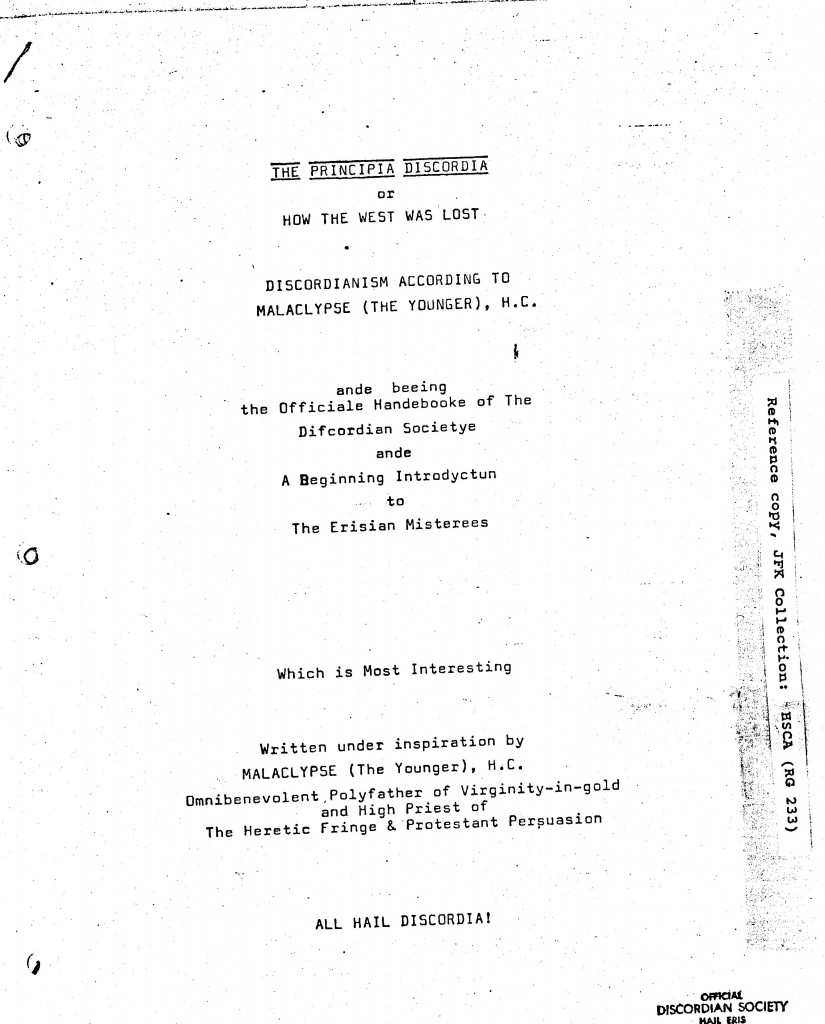
At the time, Musser shared these documents with Discordian historian Dr. Jon Swabey who afterwards transcribed this apparent 1st ed. PD and posted it on the Internet via Creative Commons.
At the time, I was unaware that the Musser/Swabey tag team had brought to the Discordian world this apparent 1st edition PD. A couple years later, Dr. Robert Newport passed on to me Greg Hill’s Discordian Archives, consisting of all 5 editions of PD. However, the discovery of these different PD editions wasn’t immediately apparent and it took me some time to sift through the Discordian Archives and identity exactly what was what. The most amazing discovery of all was an actual honest-to-Goddess copy of the first edition of Principia Discordia, Or How The West Was Lost, numbered one of five, written in Greg Hill’s own hand.
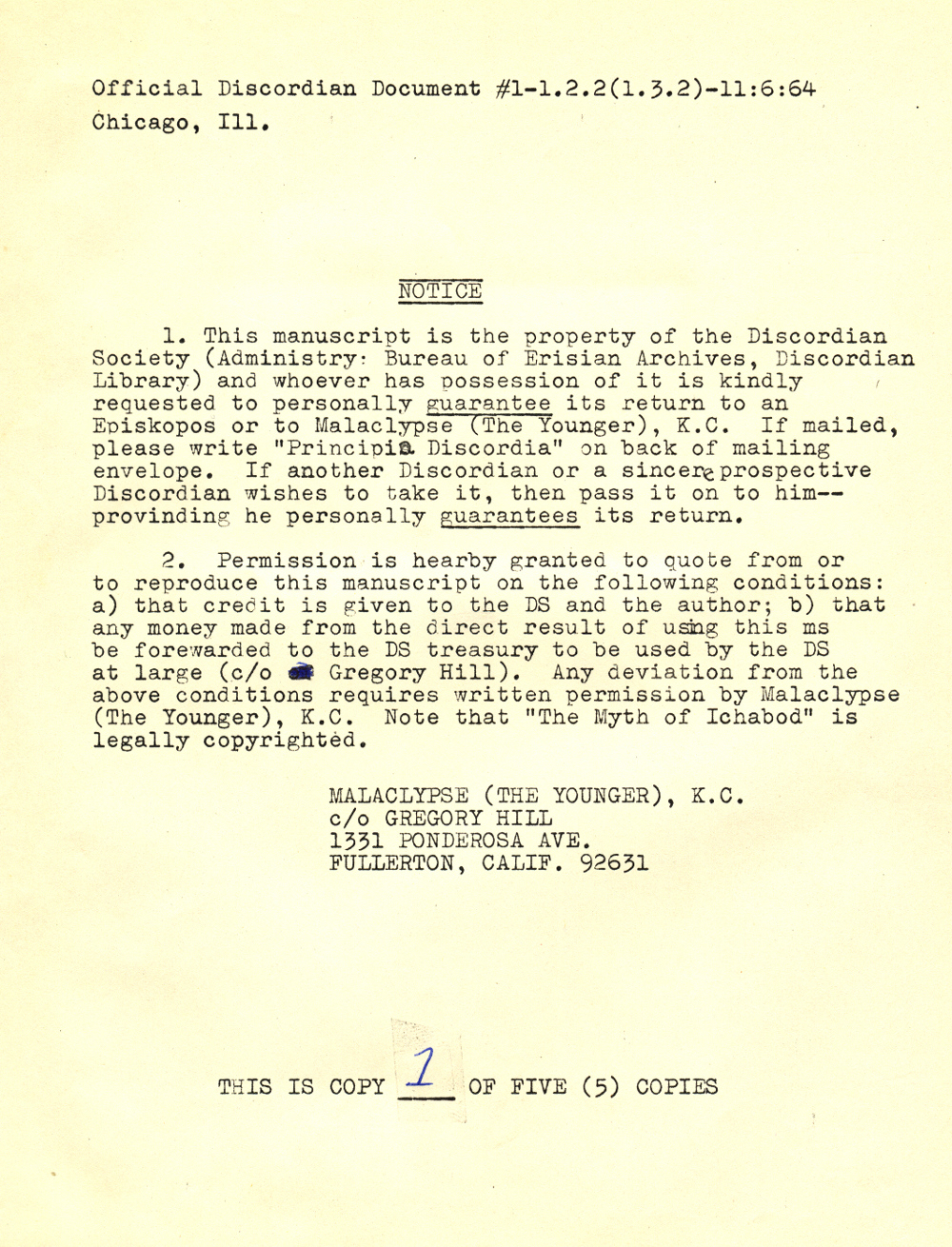
My discovery of the Holy Grail of Discordianism led to a period of intensive research into the history of PD. After a review of the Musser/Swabey/National Archives version of PD, I initially arrived at the conclusion (which I now consider erroneous!) that the National Archives version was a later and incomplete reproduction of the 1st edition PD. However, more recently I’ve come to suspect that the National Archives version is actually an early draft of PD.
For sake of clarity, I’ll henceforth refer to these two different versions of Principia Discordia, Or How The West Was Lost as: 1) the National Archives (NA) version, and, 2) the Discordian Archives (DA) version.
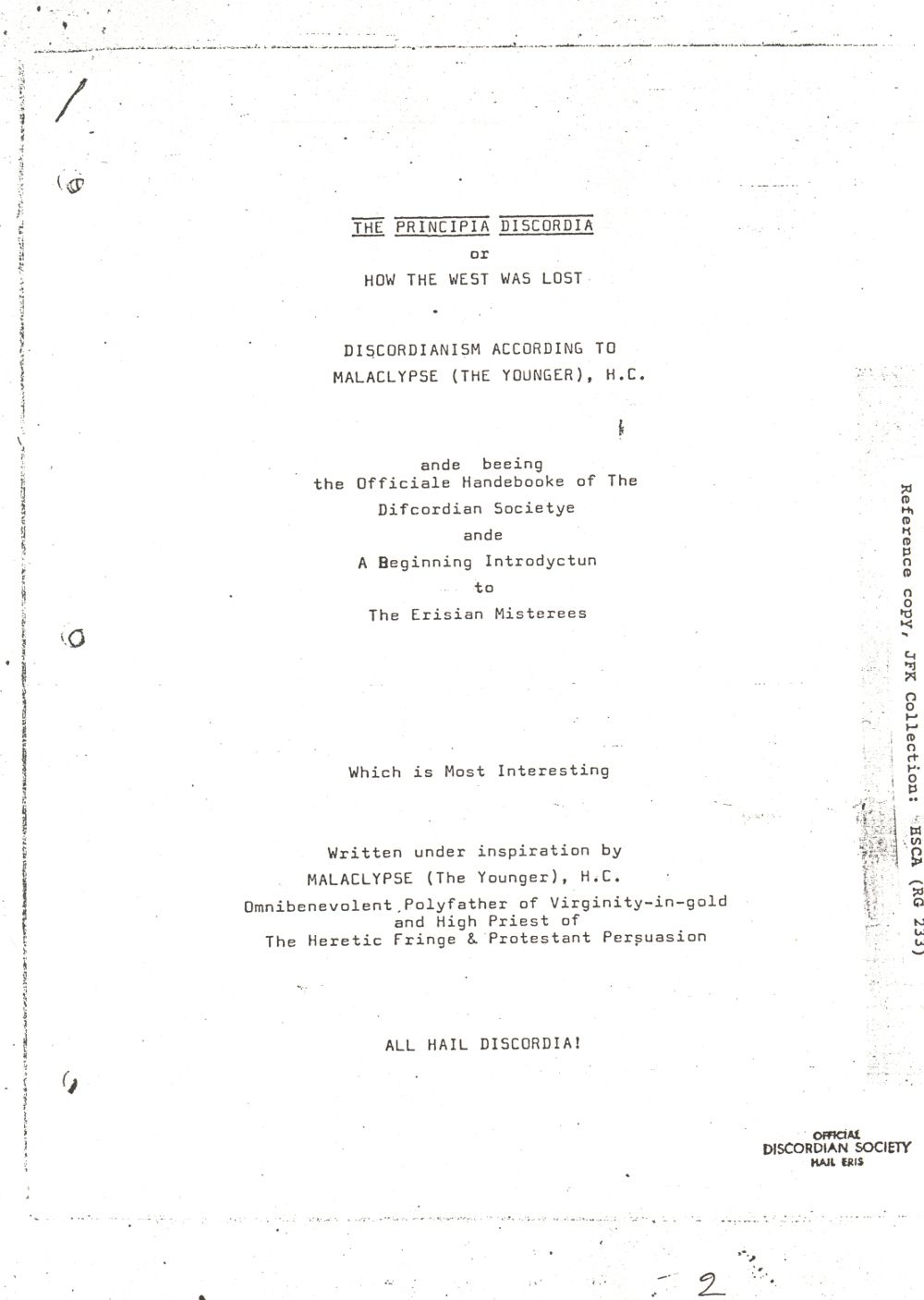
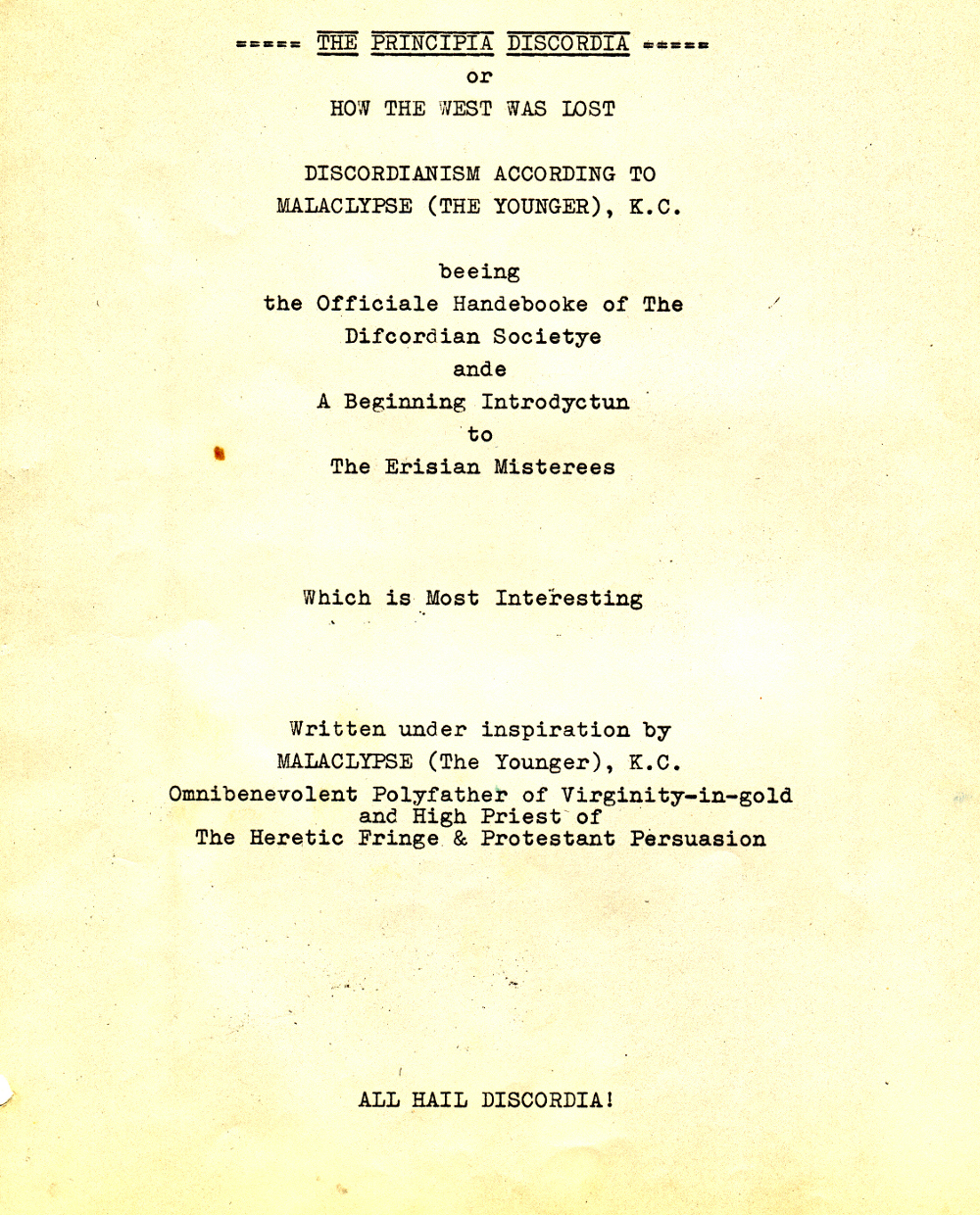
Although there are similarities between these two versions—the NA and DA—there are also a number of differences, one of which is the type font. Secondly, the NA version numbers only 36 pages while the DA version comes in at a whopping 60 pages including a number of illustrations that do not appear in the NA version.
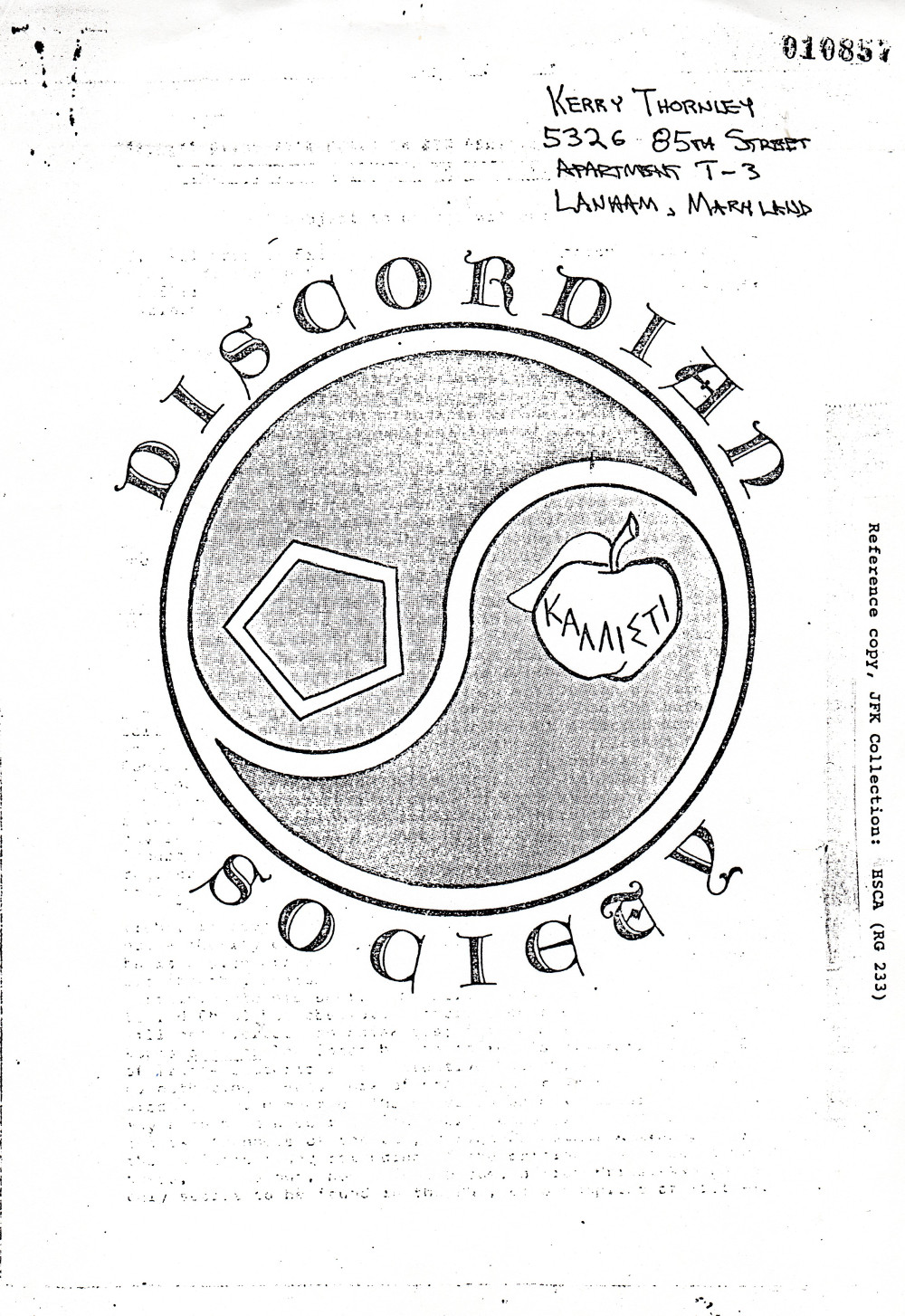
My reasoning behind this theory—that the NA version is an early draft of PD—is based, in part, on the handwritten address on the front cover:
Kerry Thornley
5326 85th Street
Apartment T-3
Lanham, Maryland
At first glance, I was a bit befuddled by this address because Thornley’s Warren Commission testimony stated that he’d moved to Arlington, VA in late 1963 and lived there until late 1964. But after giving it some thought, I remembered correspondence in the Archives where Thornley noted that he’d stayed for a period of time—in late-1963/early–1964—with his friend Robert McDonald in Maryland before his Arlington move. This provides further evidence that the NA version actually predated the DA version, and that some of the content in the NA version (as my theory goes) were pages Lane Caplinger ran off on Jim Garrison’s mimeograph machine.
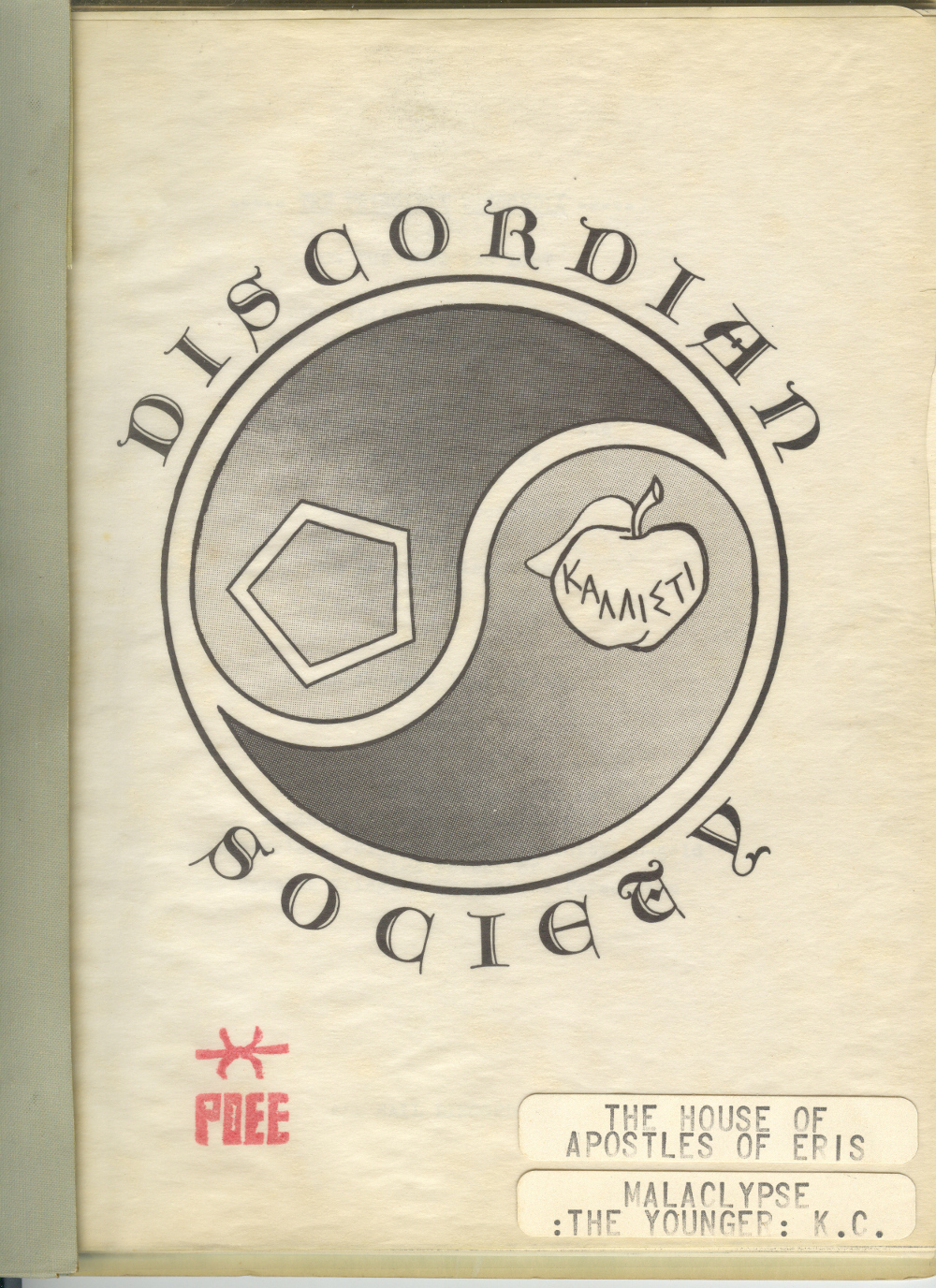
Additionally, my colleague Grouchogandhi pointed out that on the title page of the NA version the author is listed as “Malaclypse the Younger, H.C.” The curiosity, in this instance, is the title of “H.C.” In subsequent editions of the PD—including the 1st edition in the Discordian Archives (DA)—Malaclypse is referred to as “K.C.” (Keeper of the Chao) and in later editions as “K.S.C.” (Keeper of the Sacred Chao).
The third page of the NA version consists of a Legion of Dynamic Discord (LDD) certificate awarded to early Discordian Barbara Reid. Conversely, this certificate does not appear on the third page of the DA version. However, there is a blank LDD certificate on page 55 of the DA version, which suggests that the NA version was sent from Kerry Thornley (aka the Bull Goose of Limbo) to Barbara Reid in 1964 and included a signed LDD certificate as confirmation of Reid’s ordination into the Discordian Society.
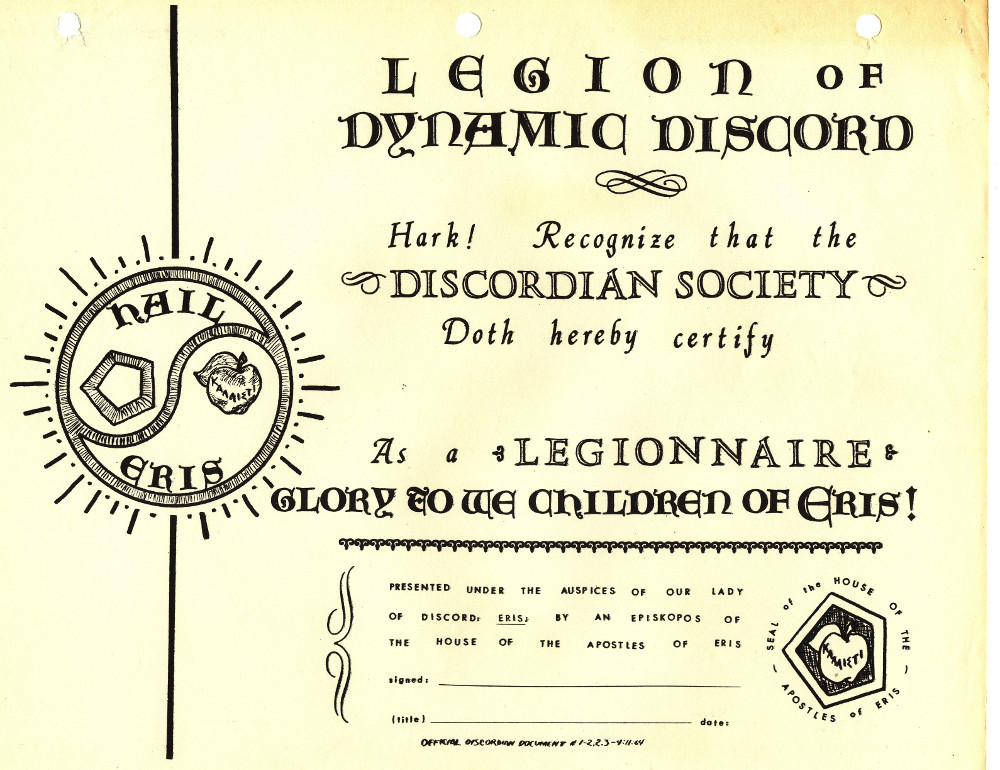
So how, pray tell, did this early Principia Discordia draft wind up in the House Select Committee on Assassinations (HCSA) files? My guess is that Barbara Reid provided the document to the HSCA in the late-70s when she testified before the committee regarding her claims that she saw Kerry Thornley in the company of Lee Oswald in New Orleans in September of 1963. However, another person who might have submitted this document to the HSCA was assassination researcher Harold Weisberg, who worked closely with Barbara Reid during the Garrison Investigation period and entertained the notion, at one time or another, that the Discordian Society was some type of CIA front organization involved in the Kennedy Assassination dance party.
Hail Eris, indeed!
Adam Gorightly presents a brief introduction to the 1st edition of the Principia Discordia, courtesy of Brenton Clutterbuck of Chasing Eris.
Adam Gorightly presents the 1st through 5th editions of the Principia Discordia.