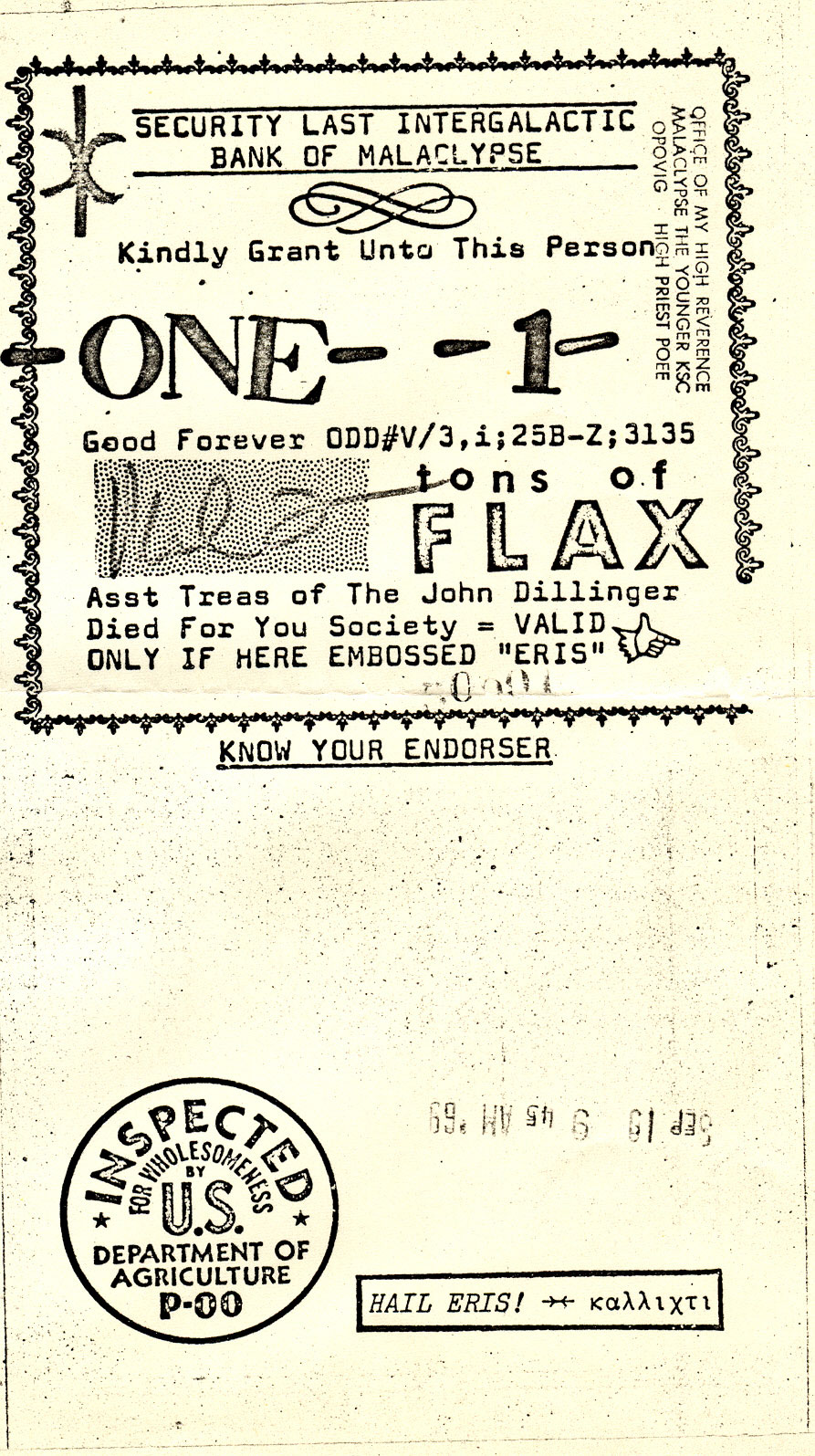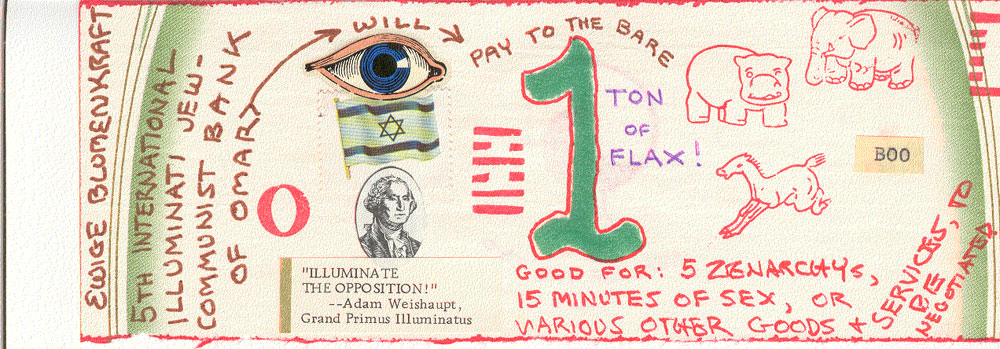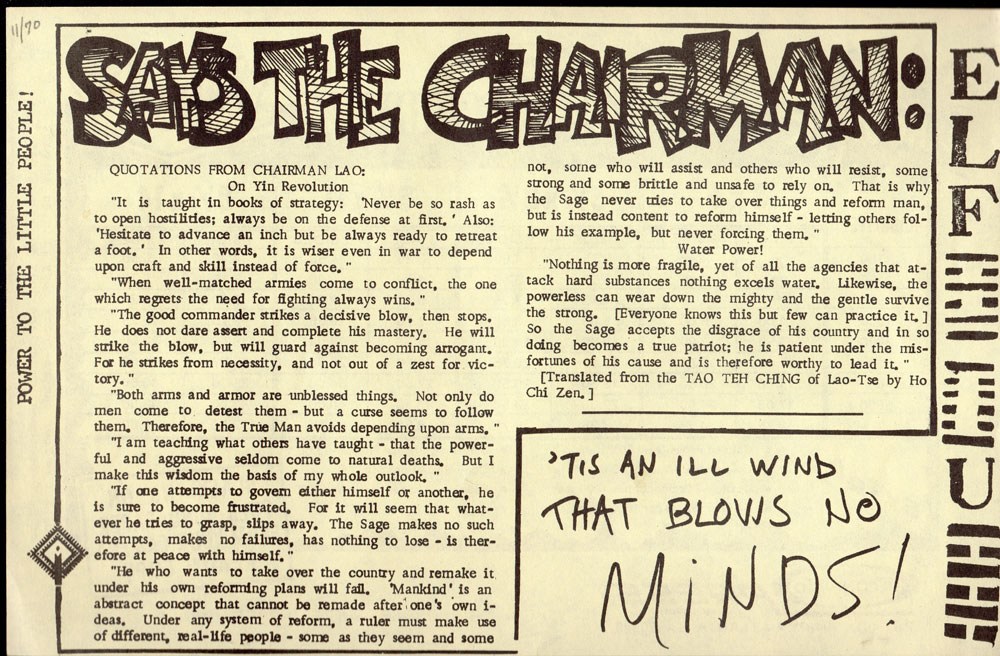
Courtesy of the Discordian Archives.
Mary—as you’ll soon discover—found herself smack dab in the middle of the Early Discordian scene along with her husband, Tim Wheeler (aka Harold Lord Randomfactor of Illuminatus! fame.)
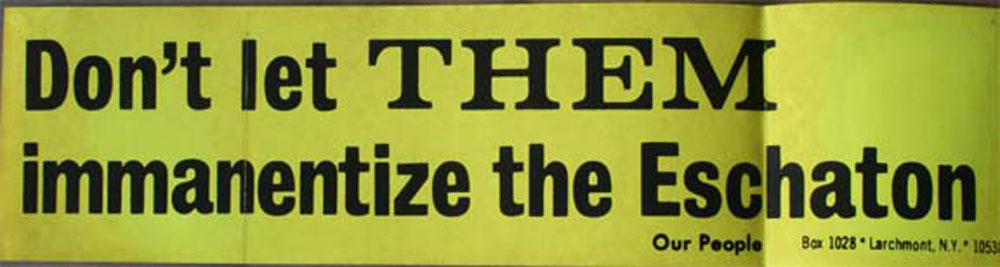
Tim Wheeler was most likely the one who entered the phrase “Don’t Let Them Immanentize the Eschaton!” into the Discordian lexicon, but (partly thanks to Tim) the phrase already had a life in conservative circles. Eric Vogelin coined it, but someone turned William F. Buckley on to it and he then helped popularize it. This probably accounts for the legend that Buckley was one of the anonymous authors of the Principia Discordia.
An abundance of the Wheeler’s materials have been incubating in the Discordian Archives awaiting the appropriate time to be pulled out, dusted off and re-injected into modern day Discordianism. Consider this but the first installment of a plethora of Tim and Mary Wheeler goodies which we will share with you in the days and weeks to come!
—Adam Gorightly
_______________________________________________________
Steven Adkins (SA): I don’t recall exactly when I first heard of Discordianism. I might have first been exposed to it in The Illuminatus! Trilogy. A friend of mine gave me a bedraggled copy I repaired with duct tape; he handed it to me with the caveat that it was mine, but I had to read it one sitting. It just so happens I was heading to Mexico for a spell so I took it with me and one day, sat down to read it. As ordered, I read it straight through over the course of 14 hours, stopping to eat, maybe not even then, reading throughout the night by candlelight in my rented one-room shack tucked away in the village of General Zaragosa, south of Monterrey in the desert state of Nuevo Léon. It has since had a big influence on me. I later collaborated on a Wiki called PlasticTub which, in retrospect, owes a great deal to the trilogy: a fictitious milieu of people with ridiculous names, divided into factions and factions within factions, quasi-political, spiritually apposed, engaged in clandestine warfare over obscure ideological differences. The “heroes” are vaguely Discordian.
In any event, I eventually moved to New Mexico and ended up in Jemez Springs, another small mountain village in a desert state, and one of my neighbors was a cool woman by the name of Mary Wheeler. She and her two adult children were my friends and co-workers and for two years we hung out and talked, drank a lot, explored the mesas with their abandoned settlements and petroglyphs, chopped wood, shot guns, worked a little….
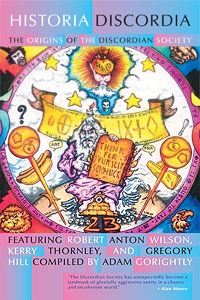
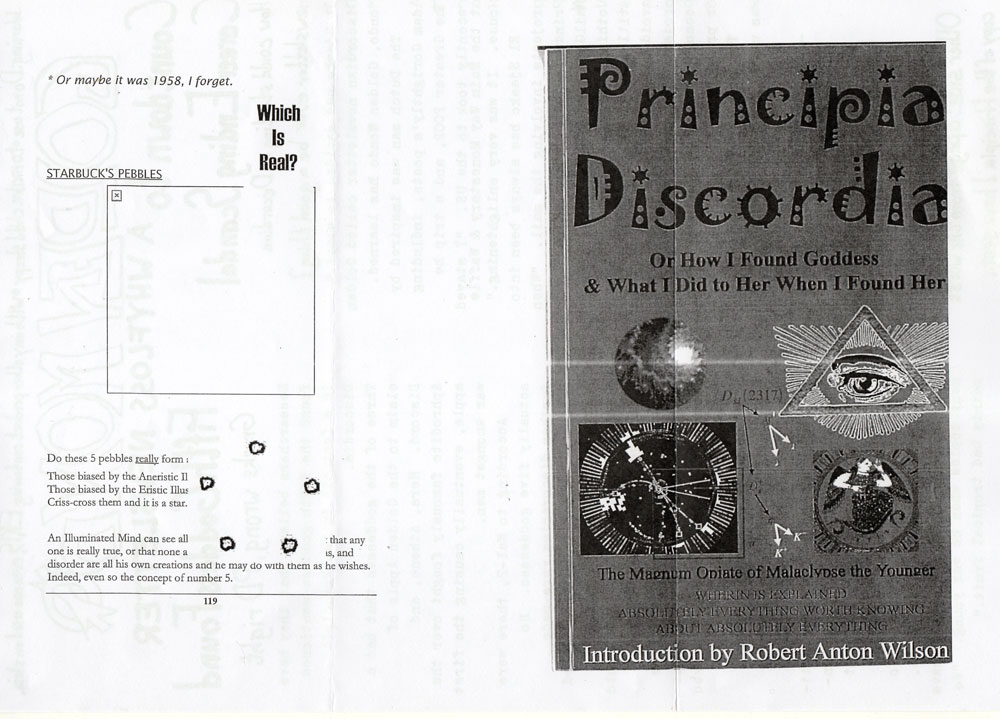
I knew Mary had been a Discordian because I ran across an old copy of the Principia Discordia at her house one day. I don’t know which edition it was, but it was yellow and about the size of a Jack Chick tract, maybe 2.5 by 5 inches, I’m not sure. I was excited to hold it in my hand and remember going on about how rare it was. Thing is, I never queried Mary about it too much, although at some point she did tell me her “Discordian name” was “Hope Springs.” When I saw Adam Gorightly’s Historia Discordia had come out, I wrote and asked if he was familiar with a Discordian named Hope Springs. He wasn’t, so I thought it’d be a good idea to contact Mary and interview her. She graciously agreed and I was able to ask her about a wide variety of topics. I think it will be of interest to Discordian and fans of the Principia and Illuminatus! I hope you agree.
Mary has been very generous with her memories and even sent me a 3rd edition of the Principia complete with rubber stamps and a rolling paper glued onto the title page. It’s one of the most precious things I own. Thanks Mary!
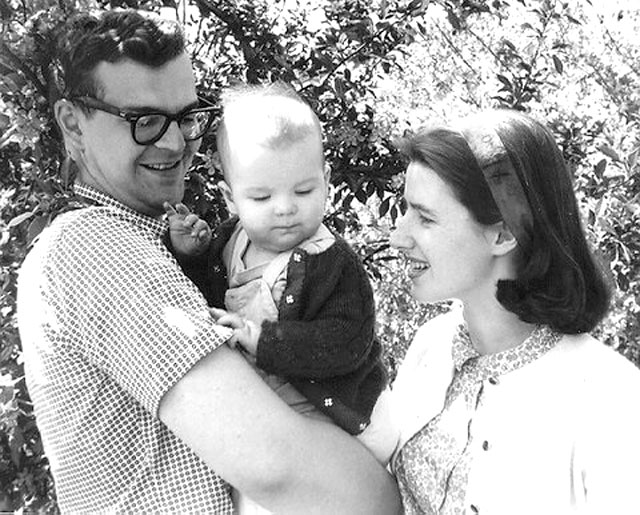
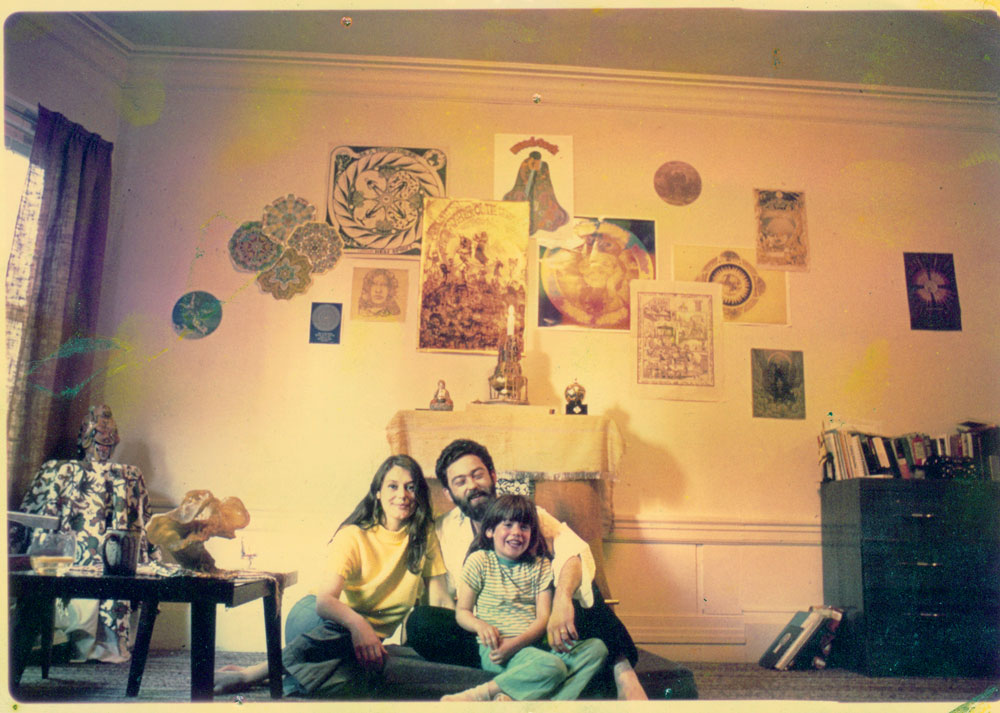
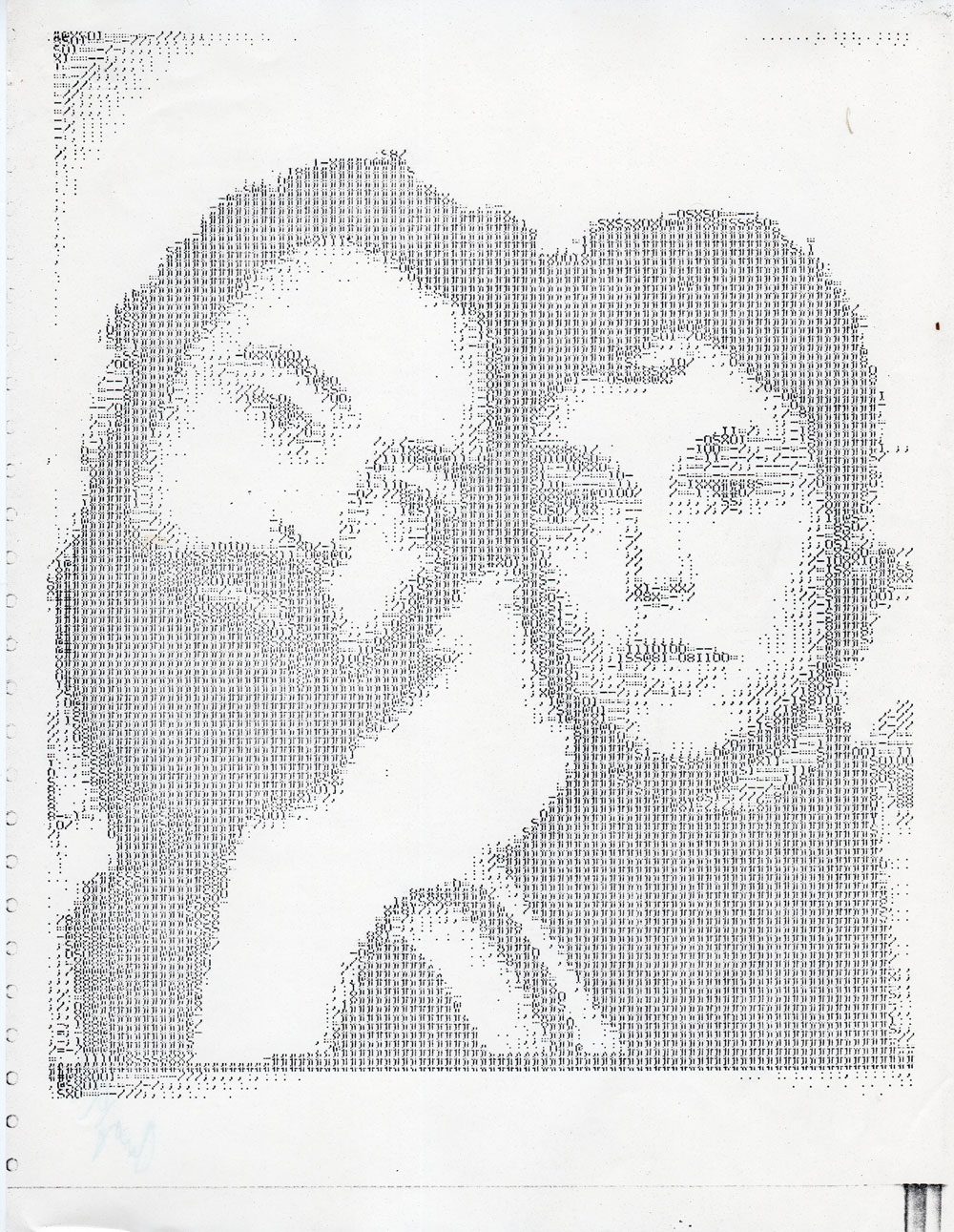
Mary and Tim Wheeler, with son Christopher.
Courtesy of Mary Wheeler.
Let’s start at the beginning…
Mary Wheeler (MA): The real hero behind that silly period was Greg Hill, Malaclypse the Younger. A sweet, smart and funny guy who lived in San Francisco. The Bobs were both working for Playboy, for the Playboy Advisor column. I was Hope Springs, and Tim, my husband, was Harold Lord Randomfactor.
SA: How did you know Greg? How did the nicknames come about? Who dubbed you Hope Springs and Harold Lord Randomfactor? BTW, when you told me Tim was Randomfactor, I nearly popped apart, because he’s a character in The Illuminatus! Trilogy.
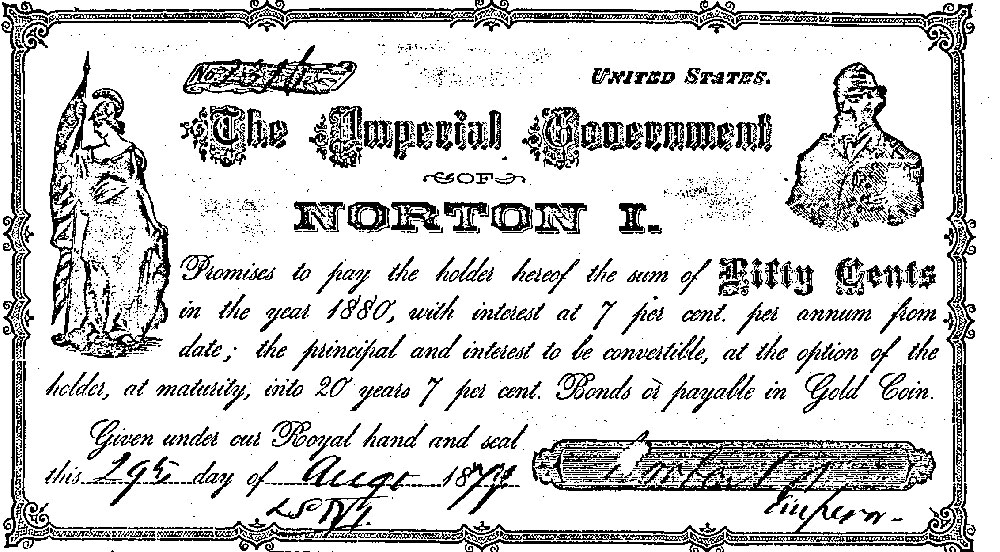
MW: We met Greg through Bob Wilson/Shea. We chose our own nicknames. Tim was always citing names like Ida Clair, which were a play on words. And yes, we certainly knew Randomfactor was a character in the Trilogy. And Bob Shea took a humorous interest in Emperor Norton of San Francisco, a crazie who anointed himself.
It was all nonsense and silly and clever fun, none of us were serious at all. In the few times we got together, all we did was laugh. We also sent around “groovy kits,” large Manila envelopes filled with clippings, drawings, objects, that we treated with great reverence. We smoked, opened the envelope, kept what we wanted and added to it, and mailed it on to the next guy.
SA: When you got together, was this in theory at least for the Discordian Society? Where did you all get together? Were these “groovy kits” a Discordian thing? What sort of topics were in the clippings? Were these sent around to friends only or were they ever sent to people you didn’t know personally, with instructions on what to do? Were they actually called “groovy” kits?

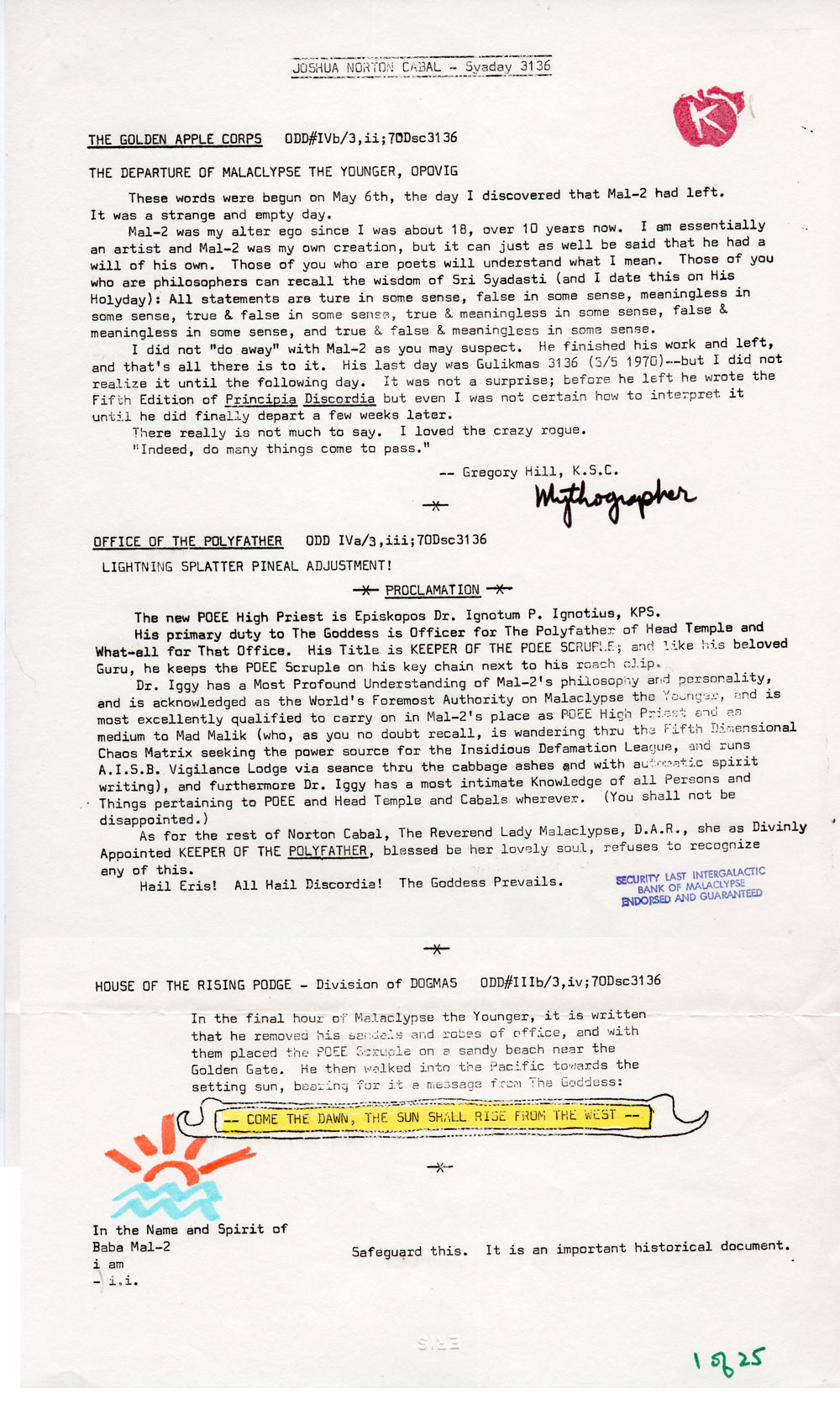
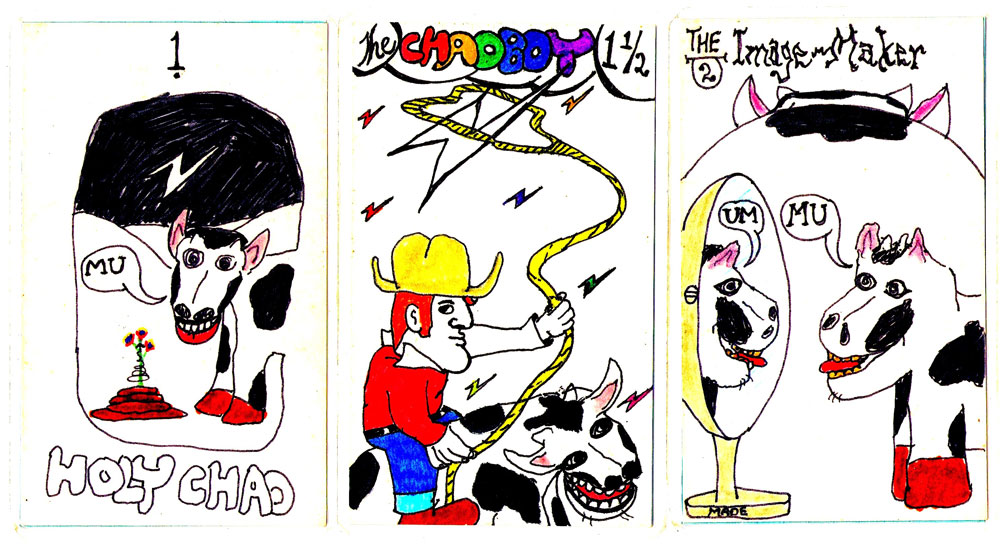
Courtesy of The Discordian Archives.
MW: Kerry was in Atlanta, as I recall, and an OK guy. There was a fellow in New Orleans whose last name was Cruikshank, I think, that was quite bizarre, and took Kennedy conspiracies too seriously. He was always in a recruiting mode. We never met either of them.
I can remember getting together with Greg only once, at Bob Wilson’s in Chicago. We were living in Indiana by then, so when we heard Greg would be visiting, we came up.
We had many social get-togethers with the Sheas throughout the years, which were less Discordian than simply friendship.
The Groovy Kits were definitely Discordian. The contents were very varied. Newspaper or magazine clippings, funny or serious; actual objects, like something unusual with a “5” or a “23” on it. Maybe a racy photo. A secret message, in code. Maybe a Mexican peso. It could be anything, but it had to be interesting, one way or the other. As far as I knew, it traveled between Wilson, Shea, Greg, Kerry and us. And yes, we called it a groovy kit. And yes, we always smoked before opening it.
There were two versions of the Principia floating around, and I think I have them both still. One groovy kit item we kept was an original Crumb comic book, which I regrettably gave to [a mutual friend] some years ago. I remember those days with great fondness, but never imagined it would still be alive 40 years later. I mean, we were just kidding!
I can’t honestly remember how we came to be a part of this… surely it was either through Bob Wilson or Bob Shea. We stayed close to the Shea’s, not so much Wilson. Tim wrote an article for National Review which Bill Buckley loved. He published the article and made it the cover story. It was all about conspiracy theories and all sorts of stuff he had picked up from these guys, so that makes me think that article came after our association with them. But that article certainly would have cemented the friendships. Remember we were on totally opposite sides of the political fence…. Well, maybe not too opposite. Everyone seemed to be a libertarian/anarchist at the time.
SA: Was Tim a freelancer or a staffer? How did you know the Bobs? Did you already share an interest in conspiracies before meeting those guys, or did they turn you on to it? Was Discordianism already well-established when you met them or did you both have a role in shaping the ideas?

Courtesy of Mary Wheeler.
MW: We were living in Larchmont, NY at the time, and when we moved to Indiana, we began to lose interest in it. We stayed in touch with the Sheas, who were fun and interesting, and way more normal than any of the others. I’m still in touch with Bob’s widow.
Tim was on the staff for about 4 years, and then when we moved to Indiana, he continued to write those short paragraphs up front for the magazine. He was a contributing editor thereafter, for about 30 years.
In those early years when Tim worked in the office, as an editorial assistant, there was a lot of joking about the Illuminati. I can remember conversations with fellow conservatives where the conspiracy of the Illuminati ballooned into a conspiracy of left-handed people, or those with first cousins named Jeffrey. It spawned fantastic letterheads! Nobody at NR took it seriously, and we made fun of those that did. I think that is why it was so much fun to discover the Discordians, who also didn’t take any of that seriously. We had discovered like-minded people who tended to be liberals, or at least anarchists. And we were right-wing crazies, although Tim was very much a libertarian. It was clearly already established by the time we were introduced, because the Principia had already been written. I think there were later editions that included some of Our People’s Underworld paraphernalia.
SA: An old roommate of mine worked for the NRA (years ago) and got this cassette in the mail from a member put out by the John Birch Society, a long thing about the Illuminati, one world government, etc. What was the feeling about this line of thinking among young conservatives at the time? Tim wrote a satirical article, so that’s one indication…. I ask because the belief that the Illuminati is out to install one world government is a strong as ever. I know that this has deep roots with the work of Taxil, Nesta Webster etc. I don’t know as much as I should about the conservative movement of the period, so this may be a dumb question, but what was the view of the Birchers among the NR-type conservatives, the Buckley line of thinking?
MW: Nobody could stand the whackos or the Birchers when we were at National Review. Buckley had dismissed them, losing critical subscribers, but picking up credence in the meantime. It was an important move on NR’s part, and Buckley’s part. There is no one today with that kind of power: he made the Birchers irrelevant to the Conservative Movement.
SA: I’ve always admired Buckley. Was he as charming personally as he appears on film? Did he know anything about Discordianism?
MW: Buckley was wonderful, extremely generous and gracious and loyal. And the real war horse behind National Review those days was his sister Priscilla, who was equally generous, gracious and loyal. Bill did know about Discordians, through Tim, but it wasn’t anything beyond simple amusement… I doubt he gave it much thought. But National Review was pretty hip. The older editors could be a bit stodgy, but they had kids our age, and the staff was pretty young, and very clever. Humor was a big part of National Review, lots of joking, pranking. Bill Rickenbacker was especially mischievous.
SA: BTW, I just read this:
“Conservative spokesman William F. Buckley popularized [Eric] Voegelin’s phrase as ‘Don’t immanentize the eschaton!’, Buckley’s version became a political slogan of Young Americans for Freedom during the 1950s and 1960s.” (citing an NR article by Jonah Goldberg entitled “Immanent Corrections”)
Courtesy of the Discordian Archives.
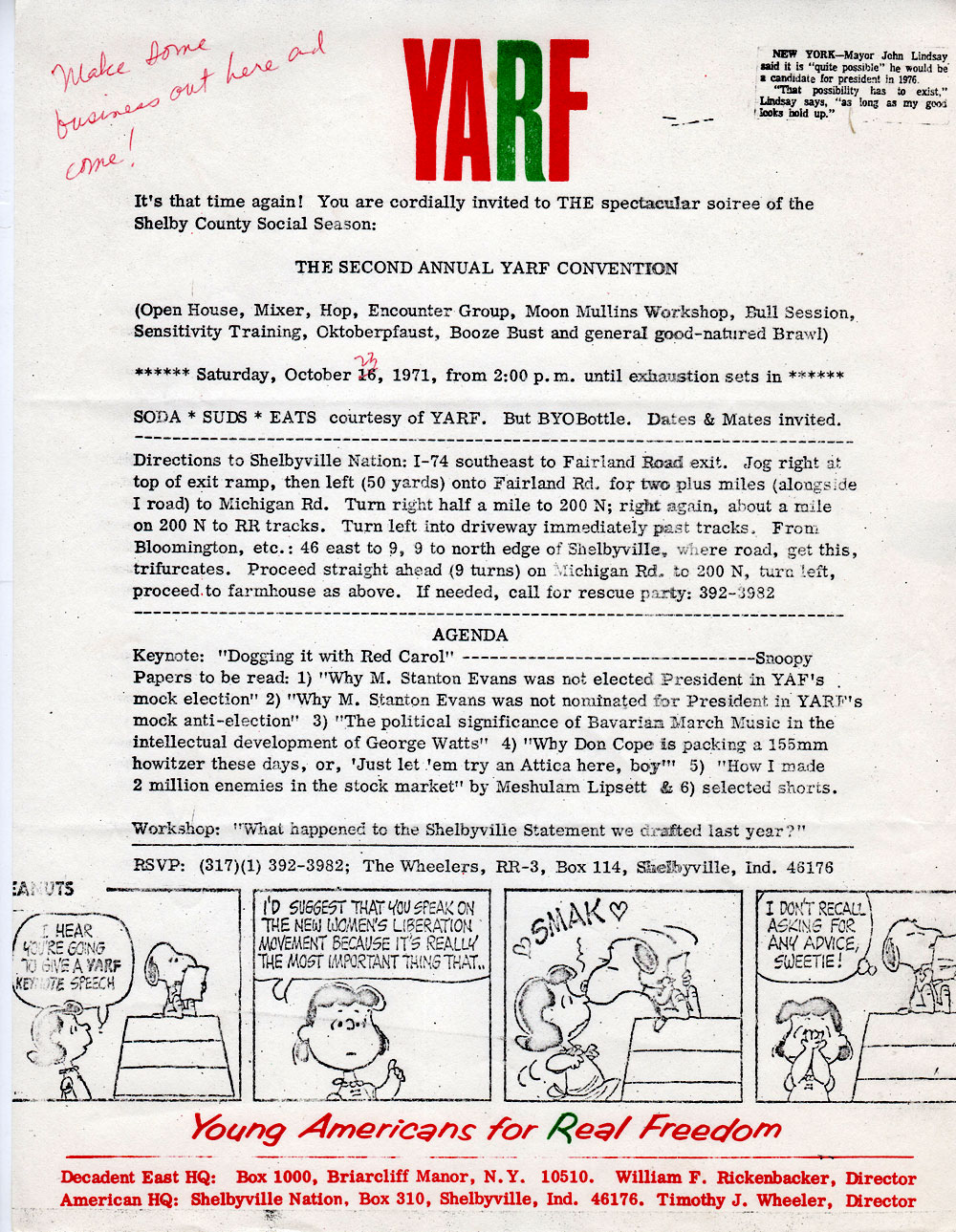
MW: YAF was never respected by those of us out of college and already at work in Conservative circles. Those were clean-cut college kids, who we made fun of by forming YARF, Young Americans for REAL Freedom, also acknowledged in Illuminatus!
Courtesy of the Discordian Archives
WFB did originally write about Voegelin’s quote, and we also wrote about it in Rally, a magazine we founded in ’64 or ’65, which was meant to be an avenue for young writers. It lasted only a couple of years, not surprisingly. Rally was a serious venture. We were back in Milwaukee, having been fired from the day-to-day National Review job. We went to many Milwaukee businessmen and raised enough money to get it off the ground, and then continued to raise money to keep it afloat. Rally was meant to be a forum for young conservatives, that would theoretically then move on to NR. It was a fine magazine.
And then we really promoted the phrase through merchandizing.
Your quote was done by evil Revisionists! (And YAF wasn’t even in existence in the 50s.)
SA: Was it Tim who turned Bill on to the expression for the first time? Did the Bobs and Greg know about it from Tim as well?
MA: It wasn’t Tim who told Bill about the phrase, and it may have even been Milton Friedman… can’t really remember. But it definitely was Tim who popularized it. And I’m sure the Bobs and Greg were not reading somewhat obscure Conservative magazines… they learned it from Tim.
SA: [The phrase basically means trying to create “heaven on earth,” kind of forcing the hand of God into bringing about the final, heavenly stage of history (the eschaton). Conservative critics have used the phrase to criticize usually but not limited to left-wing or utopian ideologies such as communism.]
I’ll definitely be discrete with anything you say about this, but didn’t you once tell me at some point you guys had a farm and grew a little weed? I know RAW was into pot and LSD and I’m assuming this was fairly current. Was this important at the time? Was it seen as something like an exploration of innerspace, cosmic awakening etc… or just a good time? Were young conservatives as apt to smoke a spliff or two as the hippies?
MW: When we moved to Indiana, we had 25 acres of land, and three acres surrounding the house; that is, not under cultivation. Yes, we grew a lot of pot—it kept us afloat through those years. It was an income for us, though it simply horrifies me now to think how reckless we were. I don’t know about the others, but we smoked just for the feel good. No thoughtful insights, no magical apparitions. We smoked with a couple of our conservative friends, but I don’t know about others. My guess is that everybody smoked, but most people didn’t gab about it.
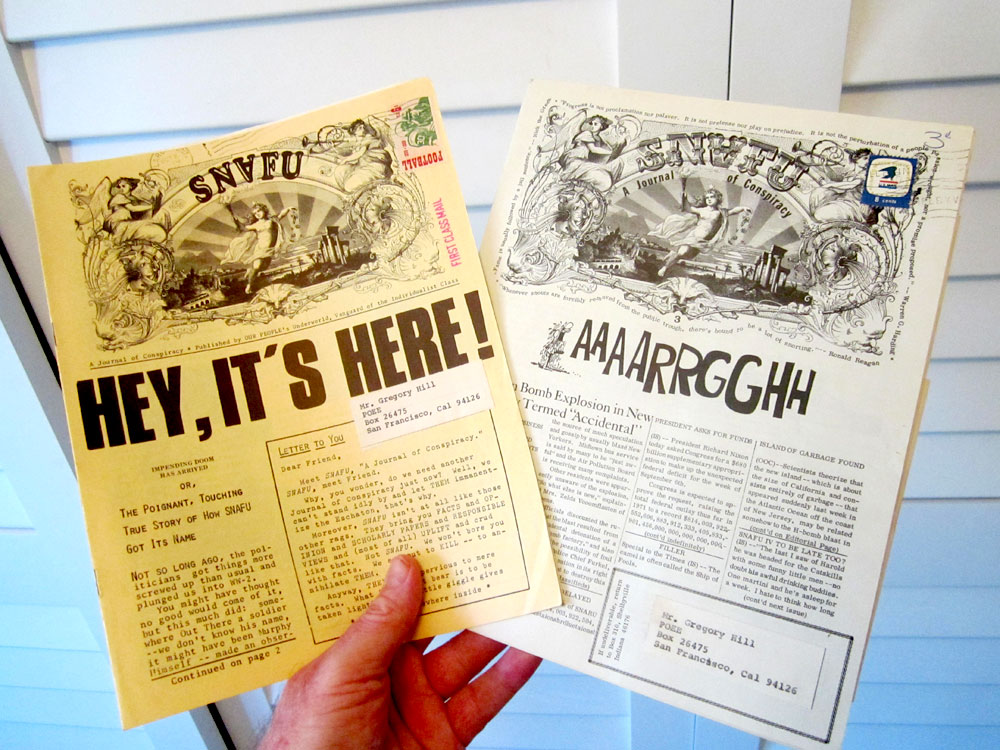
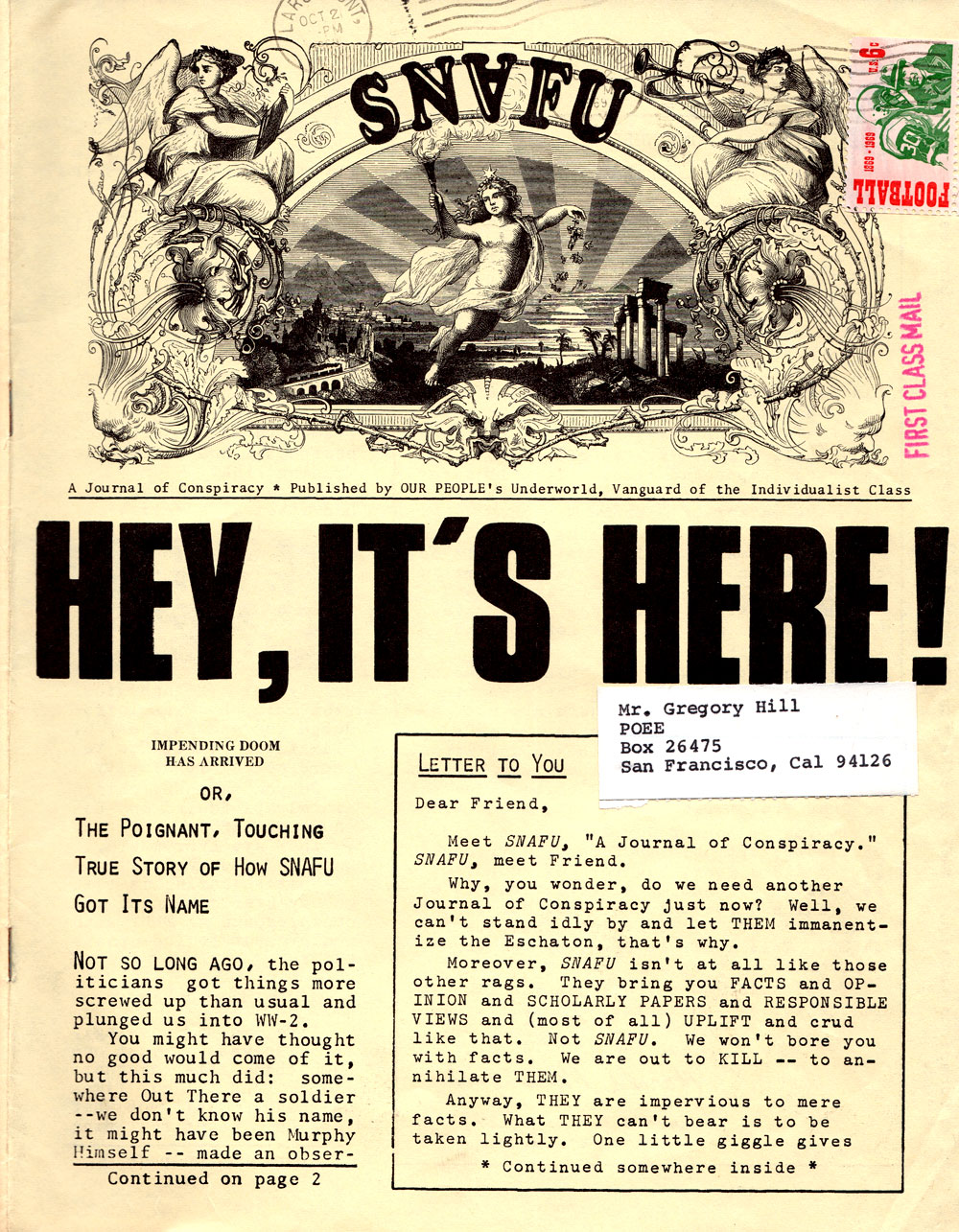
SA: What exactly was Our People’s Underground? I thought it was a group in the satire article, but I see there were little mimeo magazines published by the OPU-SNAFU. What was the group supposed to represent, even satirically and how did it come about? Was it part of the joking about with conspiracies at the NR you talked about?
Also, did you have a hand in creating SNAFU? Anything you could tell us about it?
Courtesy of the Discordian Archives.
MW: We were living in Larchmont, had three kids, one on the way. Tim was working for the Conservative Book Club, headed by Neil McCaffery. Danny Rosenthal was the head of the sales department, and he and Neil got into some sort of disagreement, and we wound up siding with Danny, and Tim (and Dan) were fired from the CBC. All of this happened when we were just getting involved with the Discordians.
Tim wrote this hilarious piece about secret societies and goings-on, and when Bill Buckley saw it, he immediately wrote Tim a note that asked if he could have the article for $1000? Tim wrote back “Yes, if I can keep this note.”
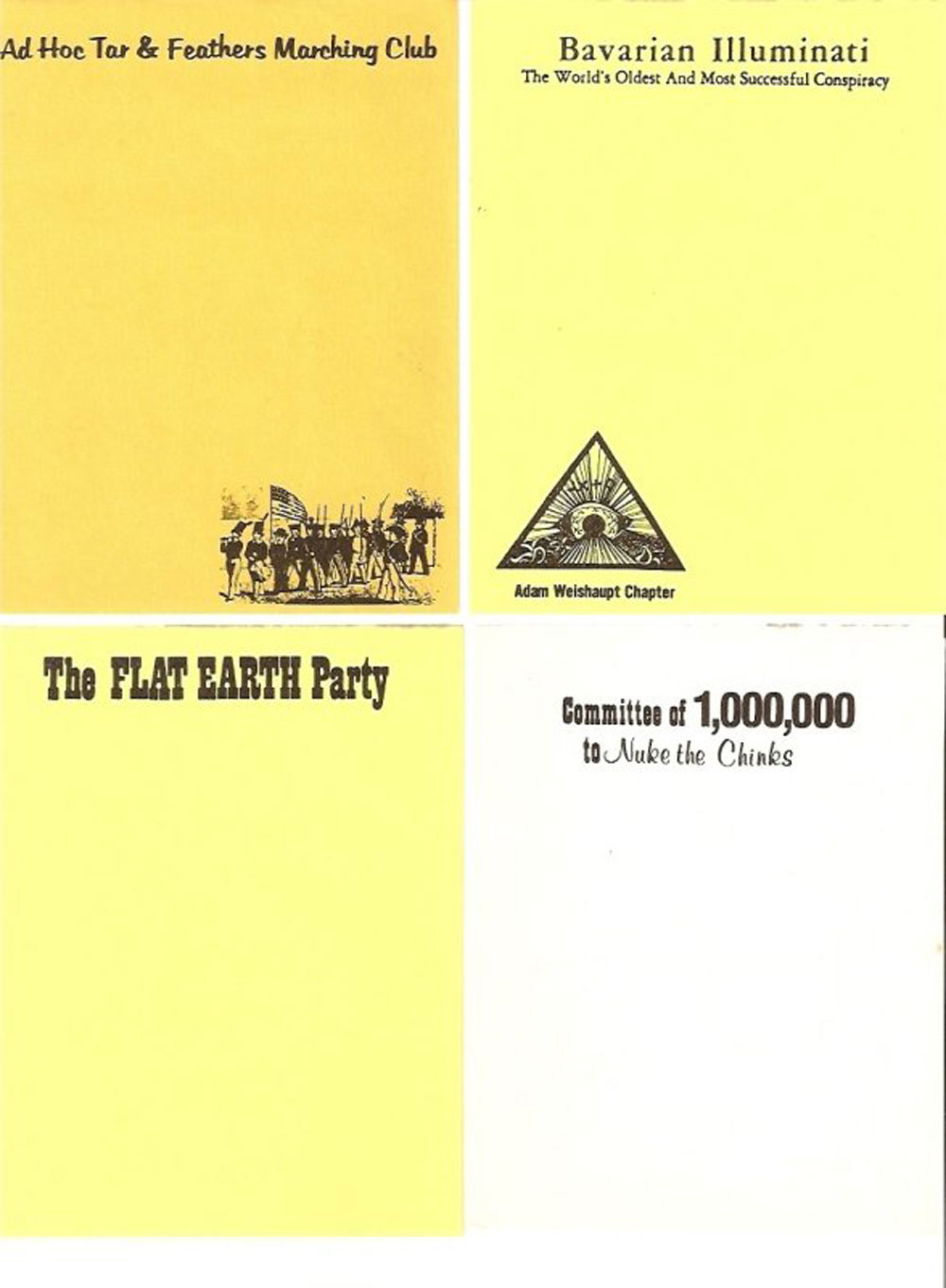
So the commercial possibilities were enormous—buttons, notepads, cards, and bumper stickers. We produced them and sold them, and formed Our People’s Underworld. It kept us alive financially until Tim finally got a speech writing job in Indianapolis.
Along the way we wrote and produced Snafu. Only four issues… it was very laborious. We had an electric typewriter, but everything else was cut and pasted onto sheets, and then taken to the printer.
It was, of course, meant to be funny, but it was a source of income as well. Not much, mind you, but we were a struggling family-of-six by the time we moved to Indiana.
The Illuminati-referenced stuff was always a huge seller.
My oldest son Christopher has thousands of photos posted on PBase (csw62) and one gallery is for Tim.
There are lots of shots of old notepads from OPU.
SA: So you sold the notepads as well? Was the OPU at first a satire and then you realized it could be a source of revenue, or was there a financial interest from the get-go? Was there any sense that the Discordian thing could generate revenue as well, or was that more a labor of love? I mean, the Principia was for sale, no?
Courtesy of Christopher Wheeler.
MW: The original article was serious satire of conspiracies, but all the merchandising flowed naturally from OPU. We didn’t have anything to do with any commercial aspect of Discordianism. I wasn’t aware that Greg was selling Principia [he was]… indeed, it seemed to us that copies were scarce and sacred. I think any real commercialism of their stuff was after it faded from our lives.
SA: Did you write any of the SNAFU material? If so, what? Were you personally as interested in the subject of conspiracies as the others? How did the whole interest in conspiracies get started at NR?
How did you guys react to Tim appearing as a character in The Illuminatus! Trilogy? Did you feel slighted that Hope Springs didn’t make an appearance? Besides you and Yvonne (Bob Shea’s wife), were there other women Discordians?
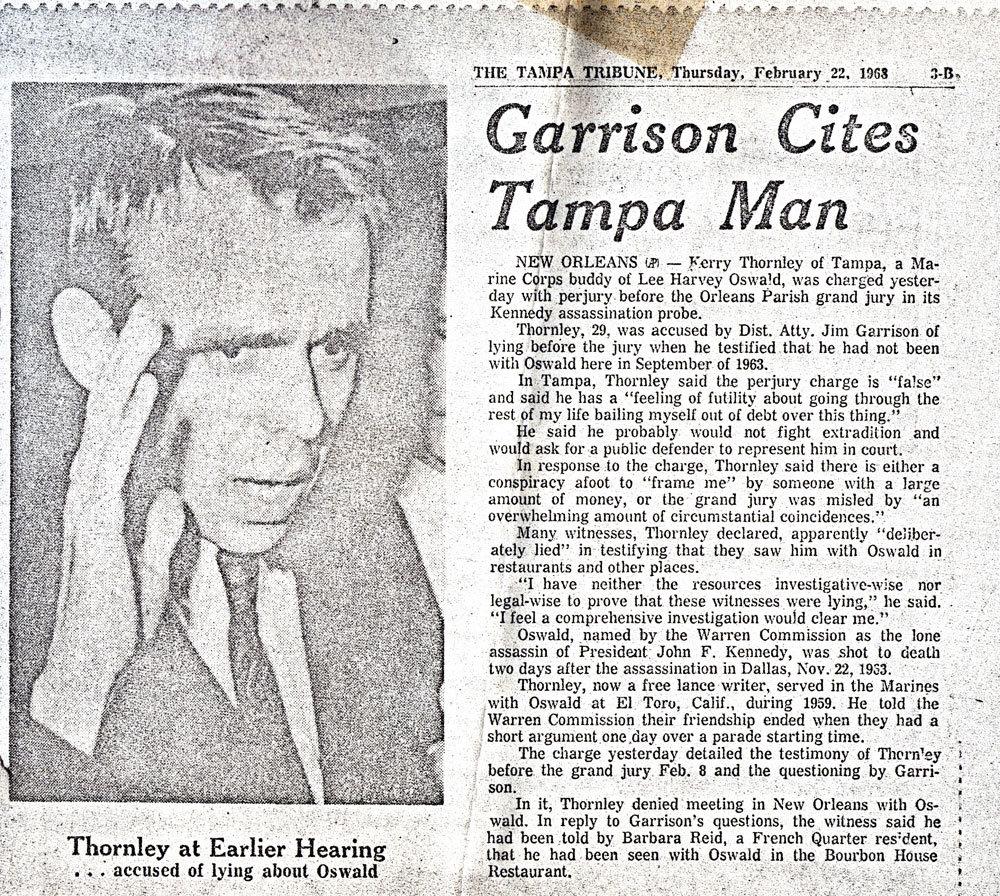
Also, was wondering if you had any anecdotes about Thornley. I didn’t get if you’d ever met in person, but maybe the others told you about him.
MW: I didn’t write any of the material, but I helped choose the cartoons, the photos, drawings… all the illustrative stuff. And helped paste it all together. I did all the administrative work. There were supposed to be 8 issues, but only four were published.
I’m sure Tim was pleased about Randomfactor—I don’t really remember. All these years later, I was surprised to see that there were quite a few years between OPU and Discordianism, and the publishing of Illuminatus! I would have guessed it was much closer together.
Our best-selling button was “Don’t Let Them Immanentize the Eschaton.” That appeared in the Trilogy. It referenced the original OPU issue of NR. And lots of OPU stuff was mentioned in the appendix of Part III, and Operation Jake, wherein some selected politicians received weird letters on weirder letterhead.
Bob Wilson’s wife Arlen, I’m sure, was active. But it was mostly a male thing. BTW, I got a beautiful condolence note from Bob Wilson when my step father died in 1970. I kept it for a long time, but don’t have it anymore. It was serious, and sweet, and wise. It was not a side of him I had seen.
We never met Kerry, but certainly had lots of cheerful correspondence with him.
I don’t know if you could see Breaking Bad [she asks because I live in France; I saw it!] but the goofy lawyer was named Saul Goodman, and he now has a spin off show, being filmed in Albuquerque. Coincidence? I think not….
SA: I’d forgotten Saul Goodman was a detective in Illuminatus! Before I print this, you can go over it to make sure you’re ok with the content. I won’t go on forever, but I want to let it unfold slowly so I don’t neglect anything.
MW: I have no problem with anything you print, except if it characterized one of these guys in a mean way. There was nothing mean or nasty or disparaging about any of our relationships.
SA: Can you tell me more about Project Jake, how it came about and was carried out, who was targeted?
You mentioned you were surprised that people are still into this because you were all joking around; why do you think people are still into it? Several editions of the Principia have been brought out, does that surprise you?
MW: We were first involved with Operation Mindfuck, wherein we took all those subscription inserts in magazines, filled in the “enemy’s” name, and subscribed for them!
So just furthering the game, and taking advantage of insane letterheads that we kept creating, we would write bogus letters to politicians that we particularly didn’t like. With us, it would have been people like John Lindsey, or Jacob Javits. With the others it would have been right-wing congressmen or senators. Some carbon copies made their way into groovy kits.
We were drawn in for the humor, the cleverness, the unusual-ness, and maybe even the novelty of conservatives making friends with liberals (although we all were pretty much libertarians). We all thought we were funny and clever. Perhaps that is why people are still being drawn in. The Trilogy was very funny and clever… I think certain types of people are drawn to it. And the guys were writers, who had a respect for their fellow crazies.
And in our own way, we took it seriously to the extent of making some money out of it, though I can’t really speak to Greg’s motives. But the content—it just wasn’t real. It was made up. It was whimsy.
We had tons of correspondence from Kerry, the Bobs, and Greg, but when Tim died, our youngest wound up tossing almost all his papers. If he hadn’t already gotten rid of them, she [Tim Wheeler’s second wife] certainly did.
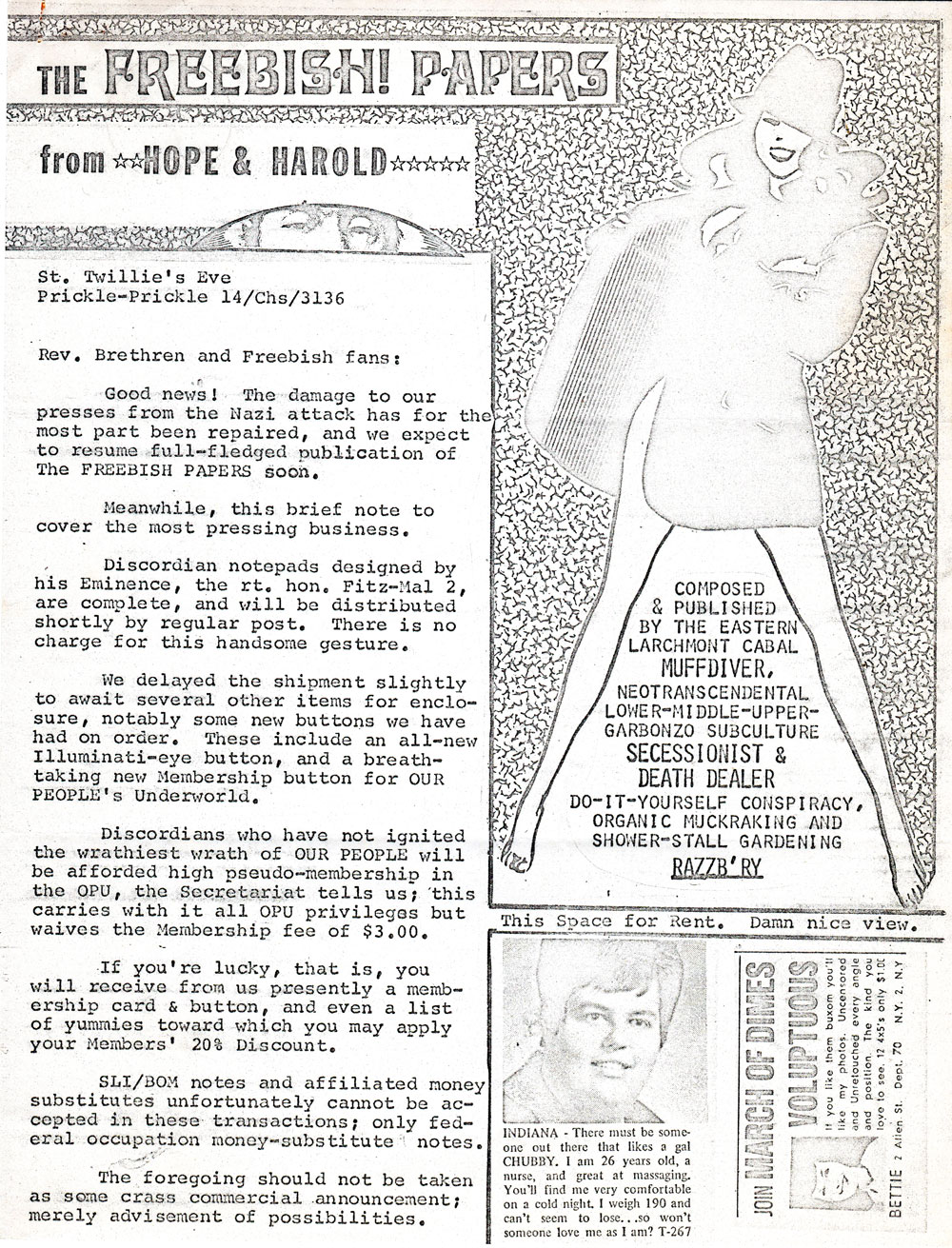
SA: What were The Freebish Papers?
Courtesy of the Discordian Archives.
MW: The Freebish Papers were nothing really, just a joint letter to a bunch of friends, there weren’t more than a couple of them. Just personal correspondence.
SA: What do you think of seeing all these scanned document you guys made? [I’m referring here to the Discordian Archives that Adam Gorightly inherited containing a multitude of Greg Hill’s papers.]
MW: No wonder Tim never met a deadline! What an insane amount of time he spent on this. I’m sure this is only the tip of the iceberg.
Links to more non-Discordian info about Tim Wheeler:
Human Events: “Friends Remember Tim Wheeler.”

 Since launching